Thursday, December 19, 2013

Bank of Canada Governor Poloz continues to insist housing will have 'soft landing'


A portion of an interview between Bloomberg News and Bank of Canada Governor Stephen Poloz on December 18th, 2013.

Right from the first question about the housing bubble you have to raise your eyebrows as the reporter begins with the premise that Canada is "immune" to a bubble. The hubris is palpable:
Q: Other economies have seen housing crashes. Canada’s home prices seem overvalued. What makes Canada immune to a bubble?

A: “First of all, puffing up the household sector, and therefore housing and cars and stuff, that was exactly one of the consequences of the easy monetary policy.”

“When you had exports actually caved in, and the only way to fill that in was to cut rates and see who would do the spending. The household sector did the spending, they did the borrowing. So they did the heavy lifting and that made a milder recession. So usually, a year or two later, you’re done. You don’t get the accumulated side effects. Here, we’re going into our fifth year and the accumulated side effects are starting to get bigger, and that is, gradually, more and more house-buying and indebtedness, and the risk that prices have gone above their fundamentals somehow. I won’t get into a debate about how much that might be, because there’s a lot of different methods to do that. It’s a very hard thing to do.”

“But the important point is that that’s a natural consequence; we were aware of it all along. And secondly, that it went very gradually. A bubble usually doesn’t look like that. If you look at those charts that people look at, the level sounds like a big number. However, it’s been going up gradually for six years in a row. Usually, when you have a bubble, it looks like the left-hand side of an Eiffel Tower. It goes up really fast, and then you can predict, well, that bubble’s going to break, you’re going to get the right-hand side of the Eiffel Tower. If you go back to 1986, 87, 88, 89, that’s what you saw. So there’s a big difference in level versus the dynamic, I think.”

“So can this thing have a soft landing? Yeah, all it has to do is gradually wind down in the opposite way through judicious monetary policy and continued growth and the fundamentals keep improving.”

Q: Are you talking about house prices or debt levels?

A: “All of those things. Those are the things we look at to ask are the household imbalances becoming too extreme. The house-price chart, relative to rent or relative to income, they’ve just gone up very, very gradually over the last six years. So soft landing is your best bet from that kind of situation. That’s historically the way it looks.”

Q: But the debt-income level is still rising. Doesn’t it need to decline at some point?

A: “Or flatten, would be the more likely scenario. And that could come from increased growth in the economy and therefore incomes. It’s probably the most likely way it would come. It doesn’t need the numerator to do the correcting.”

“We have significant slowing in both the regular credit and overall housing spending until we got late in the summer and people took advantage of low rates and said we better get in there. We believe that’s a pulling-forward, takes two or three months for us to make sure that’s true. The question you raise is a perfectly valid one, but we don’t have enough data today to make a judgment. We just won’t extrapolate it. We look to our structure, and talk to people, and what are banks seeing, etc., and we’re pretty comfortable with our soft-landing belief.”

Q: Will you be the Governor responsible for the longest pause in interest rates since the 1940s?

A: “We had never seen conditions like we faced in 2008-09. We had never seen that before. The bubble-crater story, the closest thing we’ve got to compare is the 1930s. And I’ll argue that policy making was far smarter this time around than they were in the 1930s. Good for all of us. Coordinated, other countries doing it, everybody’s doing it. And so that buffered the downside, and it could have been much worse. People lose sight of that every day. It’s been enough years that people think, why haven’t you done something more? Well, we still have that pull from that crater underneath us. We point to those things where natural growth so far has failed us. Growth is all-induced growth. That’s policy doing that for us. Let’s not forget that. As we see those animal spirits becoming more normalized, then we’ll be able to withdraw that and we’ll be happy again.”

“I can’t make a statement around what you said. It’ll take whatever it takes. We’re not going to do something silly here just because it’s been a long time. We’ve got a job to do. We’re going to do what we can to make sure that inflation gets back to normal, the economy gets back to normal, and young folks get their first jobs, whatever. There are soft spots in the economy, even though we’ve had a better experience than many other countries, it’s not ideal.”
All it (the non-existent bubble) has to do is gradually wind down in the opposite way through judicious monetary policy and continued growth and the fundamentals keep improving.

Easy Peasy, eh?.

==================

Photobucket
Email: village_whisperer@live.ca
Click 'comments' below to contribute to this post.

Please read disclaimer at bottom of blog.

Tuesday, December 17, 2013

Delta Police officer removes disturbing tweet about rifle training for school liaison duties


Two days ago, on the weekend, we posted about a rather odd twitter exchange with a member of the Delta Police Department.

This past weekend was the one year anniversary of the mass shooting at Sandy Hook Elementary School in Newtown, Conn., a tragedy in which Adam Lanza, 20, shot his way into the school he had once attended and murdered 20 first-graders (all aged six and seven), and six adults.

On the very weekend a continent paused to remember this horrific event, Delta Police School Liaison Cst Mike Atkinson (@CstAtkinson) sent out this tweet:


Atkinson's tweet says, "In an effort to update my skills as a School Liaison Officer I have just completed a 5 day course improving my rifle skills."

Umm…. so just how are marksman 'rifle' skills relevant to being a school liaison? We sought clarification.

We asked if the Cst. was preparing for a Canadian Sandy Hook (in light of the timing of his tweet):

Cst. Atkinson's reply, "we update all of our skills whenever we can. Including ones to protect our schools.":


Now… we aren't anti-gun.  Far from it. Our police should be well trained and well prepared. And responsible citizens should be allowed to own firearms. But even from a pro-gun perspective, you have to raise an eyebrow at the suggestion the Delta Police are training their School Liaison officers with rifles to, in the words of Cst. Atkinson, "protect our schools."

The overwhelming impression was that Delta Police were arming their School Liaison officer's with rifles and promoting this fact on the one year anniversary of the Sandy Hook School massacre.

Since our post, the Delta Police media liaison has reached out to us via twitter and stated, "Understandably, our tweets have caused you concern" and the tweet from Cst. Atkinson has been deleted from his twitter feed.

Was this simply a careless, unthinking comment from a member of the DPD school liaison program?  Or does it belie something more?

Questions, perhaps, for another day.

==================

Photobucket
Email: village_whisperer@live.ca
Click 'comments' below to contribute to this post.

Please read disclaimer at bottom of blog.

Monday, December 16, 2013

WilMar Heritage Proposal falls through


Last week we told you that WilMar mansion, after several years of languishing on the real estate market, had finally sold.

A renovation and redevelopment plan which was to include the construction of five new homes on the extensive property (while seeing the historic Tudor structure preserved) was tabled and it allowed a sale to be brokered.

Or at least, that was the plan.

Tonight we learn that the proposal to rehabilitate the grand old Tudor mansion at 2050 Southwest Marine Dr. and add infill through a heritage revitalization agreement with the City of Vancouver has fallen through. From the Vancouver Courier:
Developer Norm Porter of Beech Developments was behind the proposal to restore the property. He was working on the project with developer James Evans and architect Timothy Ankenman of Ankenman Marchand Architects.

The deal to buy the property was contingent on an agreement with the city and other matters, but Porter is going through with the purchase to try to recoup money that’s been spent on the proposal.

The subjects have been cleared on the purchase and the closing date is early in the new year. Porter told the Courier he’s subdividing the property into two parcels.

“We’re subdividing it into lots, one which will retain the house for now and one that we’re able to get a lot in that’s 102-feet wide — so an estate size lot that fits into the neighbourhood, the character of the neighbourhood as it exists today,” he said.

“For now, the other home will remain. There are no guarantees because I will sell it and hopefully recover the money that I’ve spent so far. So there are no guarantees whether the buyer will restore it or choose to knock it down, but at least the opportunity will be there for someone to buy it and restore it. It’s a great house with really good bones. It’s a solid structure, but it would cost a lot of money to modernize. It hasn’t been maintained.”

Porter praised the Vancouver Foundation for giving them the time to try to make the proposal work. He also said the city’s planning department did its best to lend support and expertise.

“I don’t think there were unwilling partners. The fact is the City of Vancouver doesn’t have the policy tools to make that happen in an economically viable way,” he said.

Kent Munro, the City of Vancouver’s assistant director of planning, said through an HRA the city can offer additional density heritage revitalization agreement up to the point of the cost of preserving the heritage.

“I guess from our point of view, we offered them as much density as we could and then it got to the point where they said ‘well in our view it’s not enough and we didn’t come to an agreement,’” Munro said. “They said that the property is big enough that it can be subdivided and they felt if it was subdivided and sold off to two different people it could generate more than this development idea that they had.”

The fact the proposal hasn’t worked doesn’t mean the house is going to be demolished, Munro added, pointing out the city would be willing to work with a new owner on a proposal that would preserve the historic mansion.

In any case, he said the city often deals with development ideas that for whatever reason fall through.

“It’s a good illustration of how these issues are difficult. I think a lot of people don’t realize that it’s not easy to wave a magic wand and make these things happen. It really does have to be something that works for the city, something that works for the property owner, and something that works for the community. If any of these things aren’t there, then an idea isn’t going to work,” he said.

Porter said he thought the proposal would work out.

"As I said, we spent a lot of money and a lot of time and a lot of effort trying to make this work out and I thought it was going down the right road, but in the end I guess the real estate department at the City of Vancouver didn't really agree with the values, so they made a decision that didn't allow it to work out and there's no method of changing that decision."

Donald Luxton of Heritage Vancouver said he's still optimistic the heritage home will be saved.

"I'm absolutely optimistic. If it's on a fee simple piece of land, then there are several options — someone could buy it and use it as a single-family home, someone could go to the city and negotiate a heritage agreement that could preserve the house but maybe vary the zoning. So, yes, there are certainly options. Absolutely."
So apparently there's still time for the 'WilMar for Whisperer' campaign to work it's magic.

========================
Photobucket
Email: village_whisperer@live.ca
Click 'comments' below to contribute to this post.

Please read disclaimer at bottom of blog.

Sunday, December 15, 2013

Are Delta Police preparing for a Sandy Hook style school massacre in Greater Vancouver?


Your dutiful scribes had a very odd twitter exchange on the weekend, so today's post is a departure from our regular fare.

Meet Cst Mike Atkinson of the Delta Police Department.

According to his twitter profile (@CstAtkinson), Cst. Atkinson is a Delta Police School Liaison Officer. The Delta Police website says the Delta Police School Liaison Program "is designed to build a strong relationship between police and youth to influence youth in becoming responsible members of the community."

This past weekend, as people across North America paused to remember the one year anniversary of the mass shooting at Sandy Hook Elementary School in Newtown, Conn, Cst. Atkinson posted a very odd and disturbing tweet on his twitter account.


Atkinson's tweet says, "In an effort to update my skills as a School Liaison Officer I have just completed a 5 day course improving my rifle skills."

Ummm….

In an effort to upgrade you School Liaison skills you've just completed a 5 day course improving your 'rifle' skills?  Were we reading this correctly?  How are marksman 'rifle' skills relevant to being a school liaison?

Even more disturbing, the message was retweeted by the Delta Police media relations officer (implying support for the tweet).


So we sought clarification.  We asked if the Cst. was preparing for a Canadian Sandy Hook (in light of his not so tactful tweet on this, the one year anniversary of the massacre):

Cst. Atkinson's reply, "we update all of our skills whenever we can. Including ones to protect our schools.":


'Protect our schools'?

We spoke with a number of people about this over the weekend, parents and non-parents alike, and every single one was greatly disturbed by this tweet.

Why did the Delta Police Department sanctioned this tweet on the one year anniversary of this horrible event? Is it because our police believe a similar Sandy Hook style school massacre in the Lower Mainland is an impending threat?

Do the police have information that make marksman rifle skills a necessary component of School Liaison Officer training? Since the rifle training is a part of his School Liaison training is Cst. Atkinson bringing a rifle to school with him?

Surely this demands further scrutiny.

==================

Photobucket
Email: village_whisperer@live.ca
Click 'comments' below to contribute to this post.

Please read disclaimer at bottom of blog.

Wednesday, December 11, 2013

Wed Post #2: 2013 Person of the Year - Time Magazine caves again


Time magazine's tradition of selecting a "Man of the Year" began in 1927, with Time editors contemplating newsworthy stories possible during a slow news week. The idea was also an attempt to remedy the editorial embarrassment earlier that year of not having aviator Charles Lindbergh on its cover following his historic trans-Atlantic flight. 

By the end of the year, it was decided that a cover story featuring Lindbergh as the Man of the Year would serve both purposes.

The guideline for choosing a person to profile has supposedly been the person (or group) who, for better or worse, had the biggest effect on the news that year.

Since 1927 individual people, classes of people, the computer ("Machine of the Year" in 1982), and "Endangered Earth" ("Planet of the Year" in 1988) have all been selected for the special year-end issue. 

Despite the magazine's frequent statements to the contrary, the designation is often regarded as an honor, and spoken of as an award or prize, simply based on many previous selections of admirable people. However Time magazine points out controversial figures such as Adolf Hitler (1938), Joseph Stalin (1939 and 1942), Nikita Khrushchev (1957) and Ayatollah Khomeini (1979) have also been granted the title for their impacts.

In 1999, the title was changed to Person of the Year. However, the only women to specifically win the renamed recognition have been "The Whistleblowers" (Cynthia Cooper, Coleen Rowley and Sherron Watkins, in 2002) and Melinda Gates (jointly with Bill Gates and Bono, in 2005).  Before that, four women were granted the title as individuals, as "Woman of the Year" – Wallis Simpson (1936), Soong May-ling (1937), Queen Elizabeth II (1952) and Corazon Aquino (1986). 

Time's choice for Person of the Year became highly politicized in 1979. As a result of the public backlash it received from the United States for naming the Ayatollah Khomeini Man of the Year in 1979, Time has shied away from using figures that are controversial in the United States. 

Time's Person of the Year 2001, immediately following the September 11, 2001 attacks, was New York City mayor Rudolph Giuliani, although the stated rules of selection, the individual or group of individuals who have had the biggest effect on the year's news, made Osama bin Laden a more likely choice. 

The issue that declared Giuliani the Person of the Year included an article that mentioned Time's earlier decision to elect the Ayatollah Khomeini.  The article also discussed the 1999 rejection of Hitler as "Person of the Century." In that article Time seemed to imply that Osama bin Laden was a stronger candidate than Giuliani,  just as Adolf Hitler was a stronger candidate than Albert Einstein.

Yet despite logical arguments to the contrary, both Bin Laden Hitler were not selected.

(The December 31, 1999 issue named Albert Einstein the "Person of the Century". Franklin D. Roosevelt and Mahatma Gandhi were chosen as runners-up). 

Regrettably, since the 1979 backlash over choosing Ayatollah Khomeini, Time Magazine appears to regularly cave-in to political pressure when making their 'Person of the Year' selections.

And given the intense US government pressure on both foreign governments and the media about treating Edward Snowden as a criminal and a traitor, it comes as no surprise which way Time has gone for their 2013 selection.

This year Time has chosen Pope Francis.


Just like in 2001, Time has let us down. There is no doubt who really had the biggest effect on the year's news… and that's Edward J. Snowden.

And no amount of whitewashing will change that.

==================

Photobucket
Email: village_whisperer@live.ca
Click 'comments' below to contribute to this post.

Please read disclaimer at bottom of blog.

Wed Post #1: Craigslist ad from Chinese student selling Lamborghini a fake?


About a month ago there was a bit of interest created when this Craigslist ad appeared offering a Lamborghini Murcielago LP670-4 Superveloc for sale for $388,888 (click on image to enlarge).


Said the ad:
“I'm returning to China next year after graduation so I have to sell it. Serious buyers only. Asking $388,888 firm. Will also accept trade + cash to take the car back to China. Value of trade must be $200,000 minimum. Must sell before Lunar New Year.”
To many it was another sign of the Hot Asian Money (HAM) that is credited with massively inflating property values here.  It is almost a Vancouver sport to spot Lamborghini driven by young Asian men sporting the new driver 'N' label which all people must display when the originally obtain a driver's licence.


It is the quintessential emblem that rankles regarding the whole issue of HAM. But is the November 11th Craigslist ad, which has gone somewhat viral since it's posting, legit?

Ian Young, who writes a blog for the South China Morning Post from Vancouver called "The Hongcouver", says evidence now suggests the ad is a fake.
Emails to the two addresses listed with the posting now go unanswered. However, the University of British Columbia’s student newspaper said it received a response from someone who claimed that the ad had been posted by a friend as a prank.

GTSpirit (a sports car website which extensively covered the Craigslist ad) eventually published a retraction of sorts: “We have since found out that the car is not really for sale and was instead posted by a friend of the former owner.”
Ah well. Purple isn't really our colour anyways.

==================

Photobucket
Email: village_whisperer@live.ca
Click 'comments' below to contribute to this post.

Please read disclaimer at bottom of blog.

Tuesday, December 10, 2013

Is the stage being set for a massive Bitcoin crash?


Last week we talked about Bitcoins and real estate. Bitcoins, it seems, are everywhere in the news.

This week the Los Angeles Times had an article "Cashing in on the bitcoin boom." Over on Bloomberg there's a good clip of an interview titled "12 Days of Bitcoin" series. The New York Times is all over bitcoins, and the Washington Post has been writing about them for years now.

So what the hell is a Bitcoin?

Basically, bitcoins are a type of virtual money. They can be used to purchase goods and services. And they only exist online: when you trade dollars for bitcoins, you don't get a rectangular piece of paper to put in your wallet. Instead, you receive an encoded computer file, which tells the bitcoin computer network how many bitcoins you own.

Looking into the Bitcoin phenomenon, you can't help but cast a suspicious eye.

They've gained significant notoriety for frequently being used to buy illegal goods and services. And the apparent value of a bitcoin seems to be swing very rapidly -- earlier this year, the dollar value of a bitcoin went from $260 to $63 in a flash. Last week it went from $1,160 to $560 in a day. This week Bitcoin values have recovered to the mid $900 level.

They are currently a volatility lover's wet dream. Since October 29th, 2013 they've skyrocketed from $211 to the current $940 with massive swings in between.

So what's going on here? What is it about bitcoins that makes them so useful for buying illegal drugs, and why does it seem like people are making a profit just by owning a few?

As with so many things these days, the story behind bitcoins is all about computers. We need to take a quick detour here, away from transactions, and towards computer networking.

As AL.com explains, it's like Napster

The key concept one needs to understand in order to understand bitcoins is the "peer-to-peer," or "P2P" network.

Peer-to-peer networking first captured the public interest in the 1990s, when college students used Napster to download music from each other. As another example, the file sharing service BitTorrent is powered by a P2P network.

Most internet-based services today rely on the client-server model. When you want to access a  site, your computer (the "client") sends a request to our server for permission to download our content. Millions of clients are able to contact one central server in order to access the site.

The iTunes Store runs on a client-server model: each individual consumer (client) buys music from Apple's central content hub (server). In contrast, Napster let music listeners connect to one another directly, so friends could download each others' music libraries using peer-to-peer network connections.

Likewise, the bitcoin system is powered by a peer-to-peer network. Instead of one central server keeping track of all purchases, buyers and sellers that use bitcoin connect to one another directly.

That makes bitcoin purchases essentially impossible to track -- perfect for consumers looking to buy something anonymously.

Back to money

At the same time, that lack of a central server also contributes to bitcoins' other newsworthy characteristic: huge swings in their value.

The U.S. dollar has a central server -- it's called the Federal Reserve. The Fed has tools it can use to help keep the value of a dollar relatively stable over time: it can either print dollars to prevent prices from falling, or take dollars out of the system to keep prices from rising too quickly.

Bitcoins aren't backed by a central bank. In fact, the global supply of bitcoins is controlled by a computer program. (There are about 12 million bitcoins in existence today.) That leaves their value vulnerable to quick changes in consumer demand. It's how the price of a bitcoin can change from $1,160 to $560 in a day.

So why would anyone buy a bitcoin? Some see actual value in bitcoins as a means for making anonymous purchases online (although unhappy governments will likely continue to challenge such activity). Others, like the Washington Post's Timothy Lee, see the bitcoin's "long-term potential" as a technological opportunity, rather than a new way to pay.

Bitcoin as an investment? Enter at your own risk. Former Fed chairman Alan Greenspan - a polarizing figure to be sure, and a biased contributor in this arena - told Bloomberg,
"You have to really stretch your imagination to infer what the intrinsic value of Bitcoin is. I haven’t been able to do it. Maybe somebody else can."
Business Insider's Joe Weisenthal puts it another way. "If I had to guess, I'd still guess that the price of a bitcoin is still much more likely to go to zero than to have any durable value out into the future," he says. "At this point, I have zero idea what a 'fair' price for Bitcoin is."

Which brings us to an interesting article over on Zero hedge and, specifically, this patent application:


JPMorgan has submitted a patent which appears to set the scene for a competing centralized network to Bitcoin. As LetsTalkBitcoin noted first, the "Method and system for processing internet payments using the electronic funds transfer network," states that Chase's technology is a "new paradigm." Moreover that it permits the creation of "virtual cash" (also referred to as "web cash") with a "real-time digital exchange of value."


According to eCredit daily:
Imagine paying for some product in a transaction directly with the seller that doesn’t include a costly third-party fee or the revelation of a personal account number — the current components that comprise credit card and debit card purchases. Imagine this system with a “real-time digital exchange of value.” And imagine that you can archive all the transactions in a personal digital wallet, with its own “Internet Pay Anyone (IPA)” account and inherent safeguards built-in, something that you could call “Virtual Private Lockbox (VPL),” according to JPMorgan’s patent.

If this “web cash” system — as JPMorgan Chase calls it — seems familiar, it should. It smacks of the peer-to-peer transactions of bitcoins and other cryptocurrencies that increasingly are making the world’s biggest banks uneasy about the future of e-commerce.

The patent, first revealed by LetsTalkBitcoin.com, is a fascinating look into JPMorgan’s veiled outlook on the evolving but growing bitcoin universe, and other more widely-accepted payment systems.

JPMorgan’s proposed system offers another eerily familiar component, which seemingly mimics “blockchain,” a publicly available, permanent ledger of bitcoin transactions.

Without naming the virtual currency or any competing payments system by name, the bank takes a swipe at the crytocurrency model.

“None of the emerging efforts to date have gotten more than a toehold in the market place and momentum continues to build in favor of credit cards,” according to Chase’s patent application published by The United States Patent and Trademark Office (USPTO). It was filed August 5th, 2013.

JPMorgan Chase sees “a new marketplace” emerging for “low dollar, high volume, real-time payments with payment surety for both consumers and producers.”

As LetsTalkBitcoin.com points out, “Bitcoin has also been ballyhooed for it use with micro-payments and payments under ten dollars due to its zero to negligible fee structure.”

JPMorgan Chase: “The present invention further enables small dollar financial transactions, allows for the creation of ‘web cash’ as well as provides facilities for customer service and record-keeping.”
Let's Talk Bitcoin observes:
…The present invention represents a new paradigm for effectuating electronic payments that leverages existing platforms, conventional payment infrastructures and currently available web-based technology to enable e-commerce in both the virtual and physical marketplace. The concept provides a safe, sound, and secure method that allows users (consumers) to shop on the Internet, pay bills, and pay anyone virtually anywhere, all without the consumer having to share account number information with the payee. Merchants receive immediate payment confirmation through the Electronic Funds Transfer (EFT) network so they can ship their product with confidence that the payment has already been received. The present invention further enables small dollar financial transactions, allows for the creation of “web cash” as well as provides facilities for customer service and record-keeping…”

I view this technology and patent application as an overwhelming good thing. Bitcoin is driving Innovation. It has been said that credit cards and the legacy banking system in use today was never meant for use over the internet. Chase’s updated Internet Pay Anyone technology appears to come head to head with Bitcoin.

While it remains to be seen if this technology is a “Bitcoin Killer,” other players such as eBay/PayPal (which have been riding under Bitcoin’s coattails through marketing gimmicks) ought to pay close attention to this emerging technology. If Bitcoin does get a “toehold” in the marketplace, we just might see this technology activated.
And if that patent is brought to life, Bitcoin won't simply lose half it's value in a day.  It will crash from $1,000 to $1 in the blink of an eye.

==================

Photobucket
Email: village_whisperer@live.ca
Click 'comments' below to contribute to this post.

Please read disclaimer at bottom of blog.

Monday, December 9, 2013

Median selling price in Richmond drops below $1 million to $990,000?


Over on Vancouver Condo Info, the comments section draws attention to an article in the current edition of the local newspaper, the Richmond Review.

Apparently on pg. 22 (the article doesn't appear to be online) there is a piece titled "Home sales slow as prices ease".

Contributor 'Son of Ponzi' says the article claimes the median selling price in Richmond has dropped 6.5% in the past month, falling below the $1 million mark to $990,000.

Horrors! Didn't we use to call Richmond 'HAM central'?

If anyone can find the full article, please send it along.

Meanwhile local Richmond real estate agent, James Wong, is out with his December real estate report:
Home sales in Richmond for November, 2013 totaled 288 units were 11% lower than previous month’s sales of 324 homes. With mortgage rates expected to remain stable at current level, home buyers are in no hurry to commit making a buying decision. Total active listings at the end of November were 2,080 which was just 2% lower than the month before. When compared to active listings the same time last year, current active listings were 4% lower.

The supply of homes for sale in Richmond as measured by months of inventory (MOI) at 6.25% remained around the same level compared to the previous 5 months. The MOI for detached homes remained around the same level the month before. At a MOI of 6.72, home sellers are taking the cue from the market, maintaining their asking prices. The MOI for Richmond townhouses improved further for home seller when the MOI edged from 5.32 to 5.01. The MOI for condos deteriorated slightly, changing from 6.73 to 7.39 due to a slight increase in the number of active listings. The number of total active listings in Richmond at the end of November at around 2,045 units were just marginally lower than the active listings count of 2.080 the month before. Other than condos, detached homes and townhouses in Richmond are holding up well. Compared to a year ago, total Richmond home sales in November at 288 units were 39% higher than the 207 units posted a year ago.

Richmond housing market outlook 
The tapering in home sales in Richmond can be expected the next 3 months due to seasonally lower home buying activities. Well priced properties were selling reasonably well. From conversations with other realtors, many sellers were reported to have turned down low-ball offers. 
The current statistics for Richmond detached homes are:
  • Single family detached homes listed for sale - 769 homes. 
  • 534 (69%) of these homes are over $1,000,000. 
  • The average past 3 months sales for homes over $1.0 million was 51 homes 
  • MOI for detached homes over $1,000,000 is 10.47 months of supply. 
  • Total single family detached homes for sale over $1,500,000 - 320. 
  • The average 3 months sales - 21 units with 15.24 months of supply.
Although home sellers of million dollar homes are under pressure to drop their prices, many sellers are holding on to their asking prices hoping to cash out at prices they are expecting. Agents were lamenting that many of their offers were turned down due to sellers not prepared to meet buyers offers.
Once again Mr. Wong offers a more sobering take on conditions than what we have heard from other quarters.

==================

Photobucket
Email: village_whisperer@live.ca
Click 'comments' below to contribute to this post.

Please read disclaimer at bottom of blog.

Sunday, December 8, 2013

Wilmar Mansion sells


Sitting high on the Marine Drive escarpment bordering the Fraser river sits Wilmar Mansion.  If there is one property in Vancouver you dutiful scribe would love to acquire, it is this one.

(click on all images to enlarge)


Originally developed around 1925, this estate sits on almost 2 acres (84,831.7 square feet) of prime land at 2050 SW Marine Drive. The centre piece of this site is an old Tudor styled home with almost 9,000 square feet of living space untouched from its days of grandeur (regrettably that means the disrepair is such that lots of 'touching' is now required).

Next to the home is a 3 car garage with an undeveloped coach house.


The mansion was part of a $40 million estate that was bequeathed to the Vancouver Foundation when Judith Jardine passed away in 2006. Jardine, 82 at the time of her death, was the last of a family whose fortune was made by her grandfather, William Kitchen.

William Kitchen built railroads in New Brunswick before moving to B.C., where he became a director of the Pacific Great Eastern Railway, which in turn became BC Rail.

In 1925 Kitchen bought the property for $10,000 and constructed the mansion that currently sits on the site. The mansion's name 'Wil mar' is a contraction of Willard and his wife, Mary Kitchen.


The mansion was designed in the Tudor Revival style, with typical features such as half-timbered gables and notable brickwork and chimneys. Tudor Revival was popular with clients throughout the British Commonwealth as it reflected a long lineage of English country manors, prestige and an aristocratic lifestyle.

Willard and Mary had three daughters — Agnes, Ellen and Gladys. The two eldest daughters — Agnes and Ellen — never married. The third, Gladys, studied law at the University of New Brunswick and was called to the bar in 1918. She became one of Vancouver’s first female lawyers.

Gladys married William Jardine, a local banker, and they had one child — Judith.


Like her two aunts, Judith Jardine never married. She was passionately interested in the arts and teaching (though it’s unclear whether she ever taught professionally). She received an MA in French from UBC in 1947, was Secretary of Vancouver’s Community Arts Council from 1962 to 1979, and co-authored a book on the history of the council.

In 1987, Jardine’s Aunt Ellen — the last of three Kitchen daughters — died, and Jardine inherited WilMar Estate.

Judith Jardine was Willard and Mary Kitchen's only grandchild. In her later years she suffered from dementia.


Apart from that, little else is known of Judith Jardine.

Vancouver Foundation President and CEO Faye Wightman, in a Vancouver Sun article earlier this year, said:
"It's as if she purposely decided to live under the radar."
When her will was read, the UBC Faculty of Medicine, Vancouver School of Theology and Vancouver Foundation were all surprised to find they were included as beneficiaries. Since Jardine’s death in 2006, and as the extent of the Jardine estate became clearer, the beneficiaries realized they had been given about $42 million ($6.4 million, $50,000 and $34 million, respectively).

Jardine's bequest is among the largest charitable donations ever made in B.C.

The bequest was made in memory of Jardine's father William (the fund will be called the W.E. Jardine Memorial Fund) and it is expected to generate about $1.4 million for granting every year. Jardine wanted this money split in two — with $700,000 annually going to BC Conference of the United Church, and $700,000 to Vancouver Foundation.

Wightman said it came as a complete surprise when Jardine's will was read:
"This is someone none of us ever knew. She's someone who the more you learn about, in some ways, the less you seem to know. We have only a few pictures of her. We know she was passionately interested in the arts and teaching and was involved with the Vancouver Arts Council."
After Jardine inherited WilMar and the family fortune in 1987, she lived in the house alone until her death in 2006.

In 2011 the Vancouver Foundation enlisted the services of real estate Larry Yatkowsky to sell the mansion. After sitting vacant for several years with no takers, a renovation and redevelopment plan which will include the construction of five new homes on the extensive property (while seeing the historic Tudor structure is preserved) was tabled and allowed a sale to be brokered.


In some ways is sad to see the property change hands in this manner.

(Oh, to be able to personally procure and restore this magnificent house)

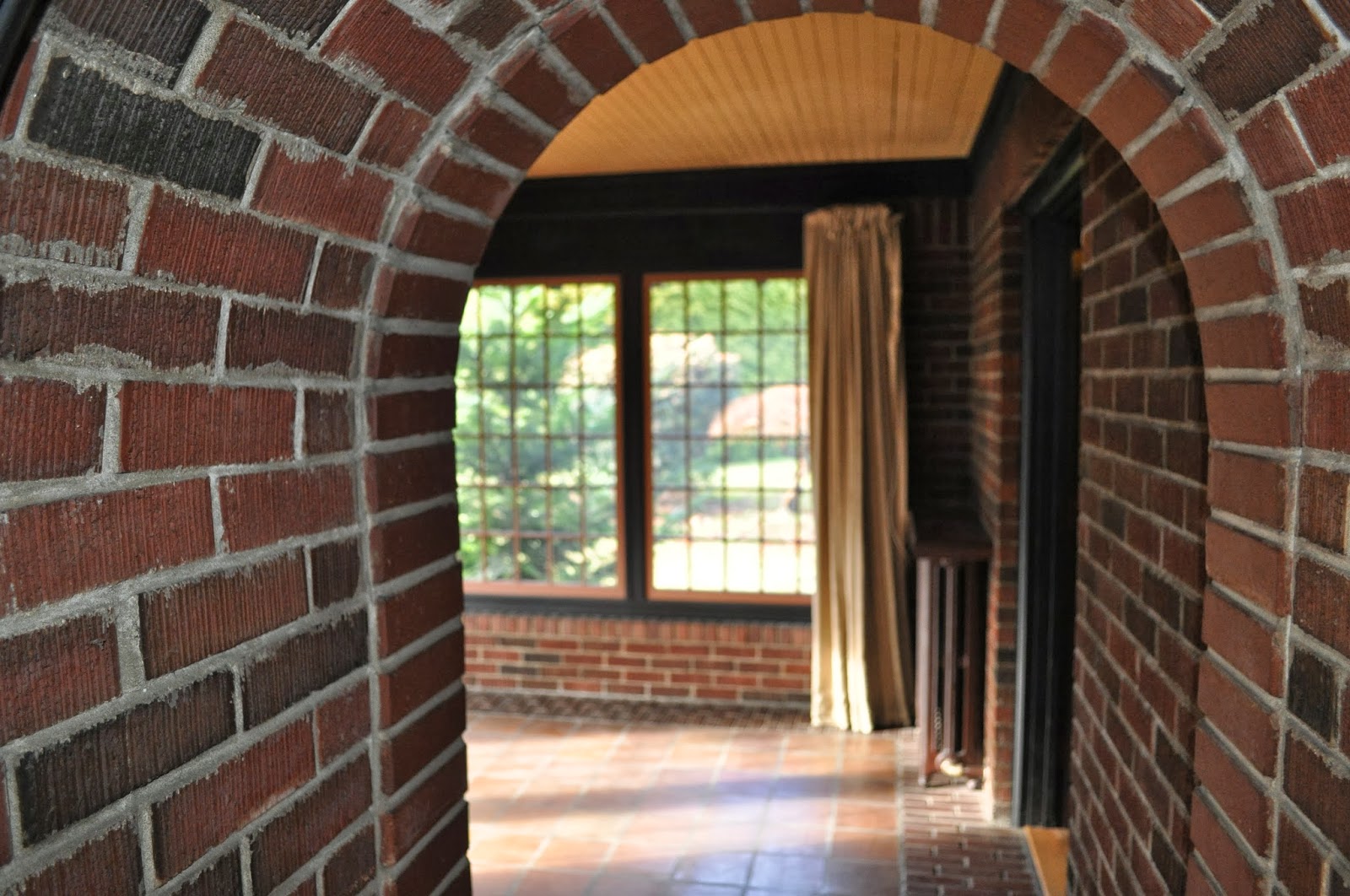
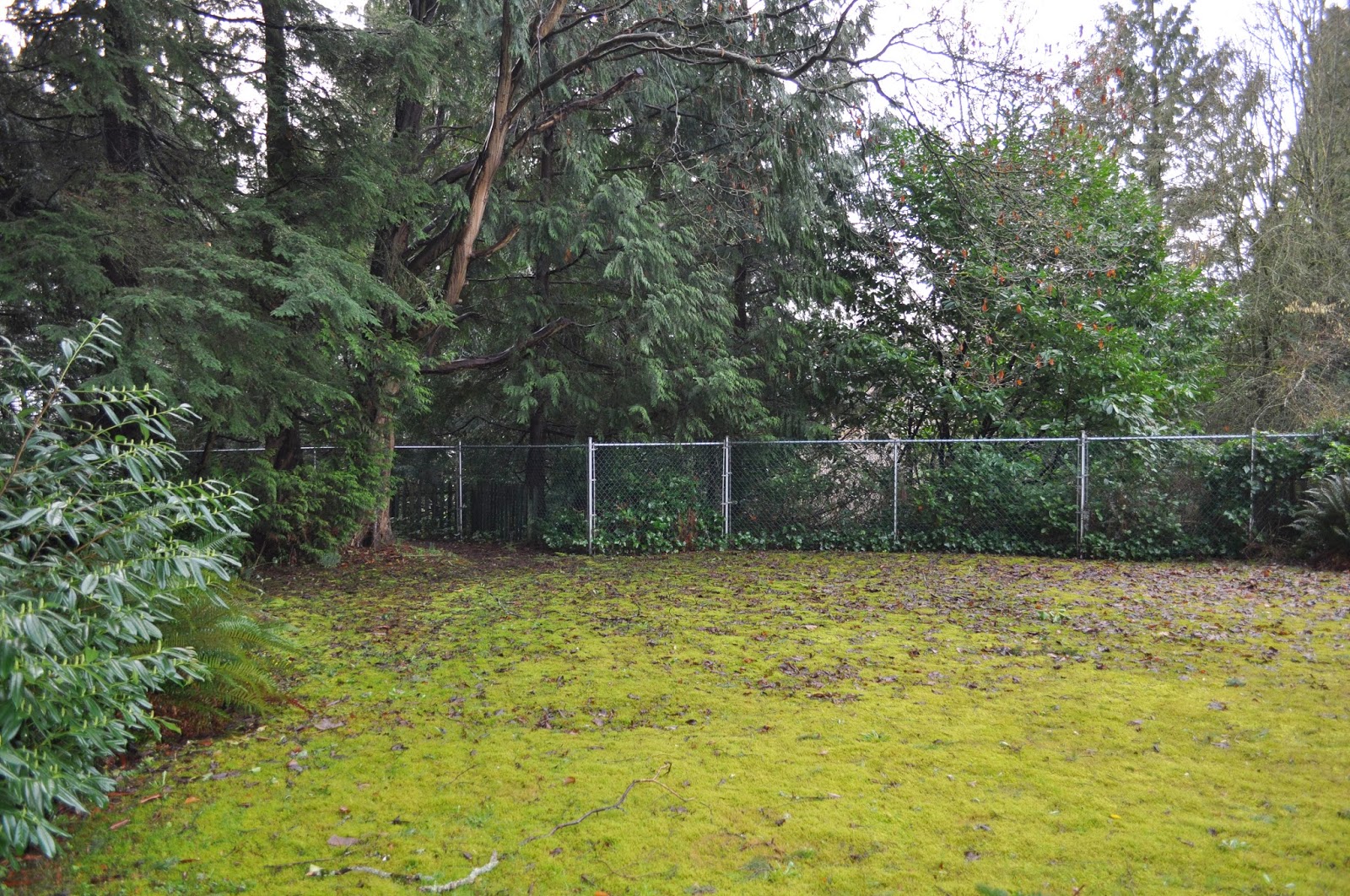
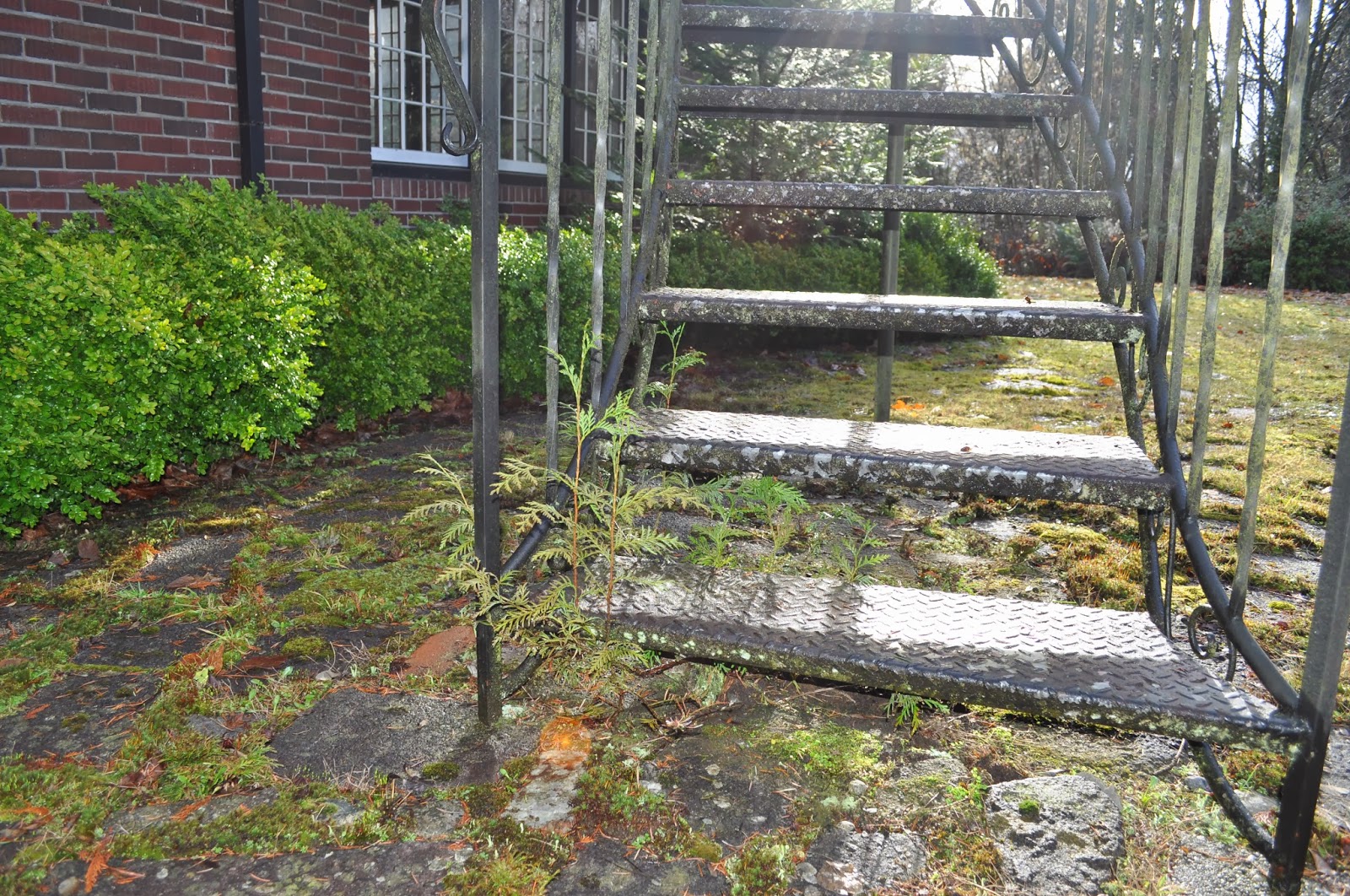
So as news that this wonderful old mansion has officially sold, we offer a few photos of a property long past it's prime and a throwback to another era…

(hat tip Larry Yatkowsky)


==================

Photobucket
Email: village_whisperer@live.ca
Click 'comments' below to contribute to this post.

Please read disclaimer at bottom of blog.