Sunday, December 8, 2013

Wilmar Mansion sells


Sitting high on the Marine Drive escarpment bordering the Fraser river sits Wilmar Mansion.  If there is one property in Vancouver you dutiful scribe would love to acquire, it is this one.

(click on all images to enlarge)


Originally developed around 1925, this estate sits on almost 2 acres (84,831.7 square feet) of prime land at 2050 SW Marine Drive. The centre piece of this site is an old Tudor styled home with almost 9,000 square feet of living space untouched from its days of grandeur (regrettably that means the disrepair is such that lots of 'touching' is now required).

Next to the home is a 3 car garage with an undeveloped coach house.


The mansion was part of a $40 million estate that was bequeathed to the Vancouver Foundation when Judith Jardine passed away in 2006. Jardine, 82 at the time of her death, was the last of a family whose fortune was made by her grandfather, William Kitchen.

William Kitchen built railroads in New Brunswick before moving to B.C., where he became a director of the Pacific Great Eastern Railway, which in turn became BC Rail.

In 1925 Kitchen bought the property for $10,000 and constructed the mansion that currently sits on the site. The mansion's name 'Wil mar' is a contraction of Willard and his wife, Mary Kitchen.


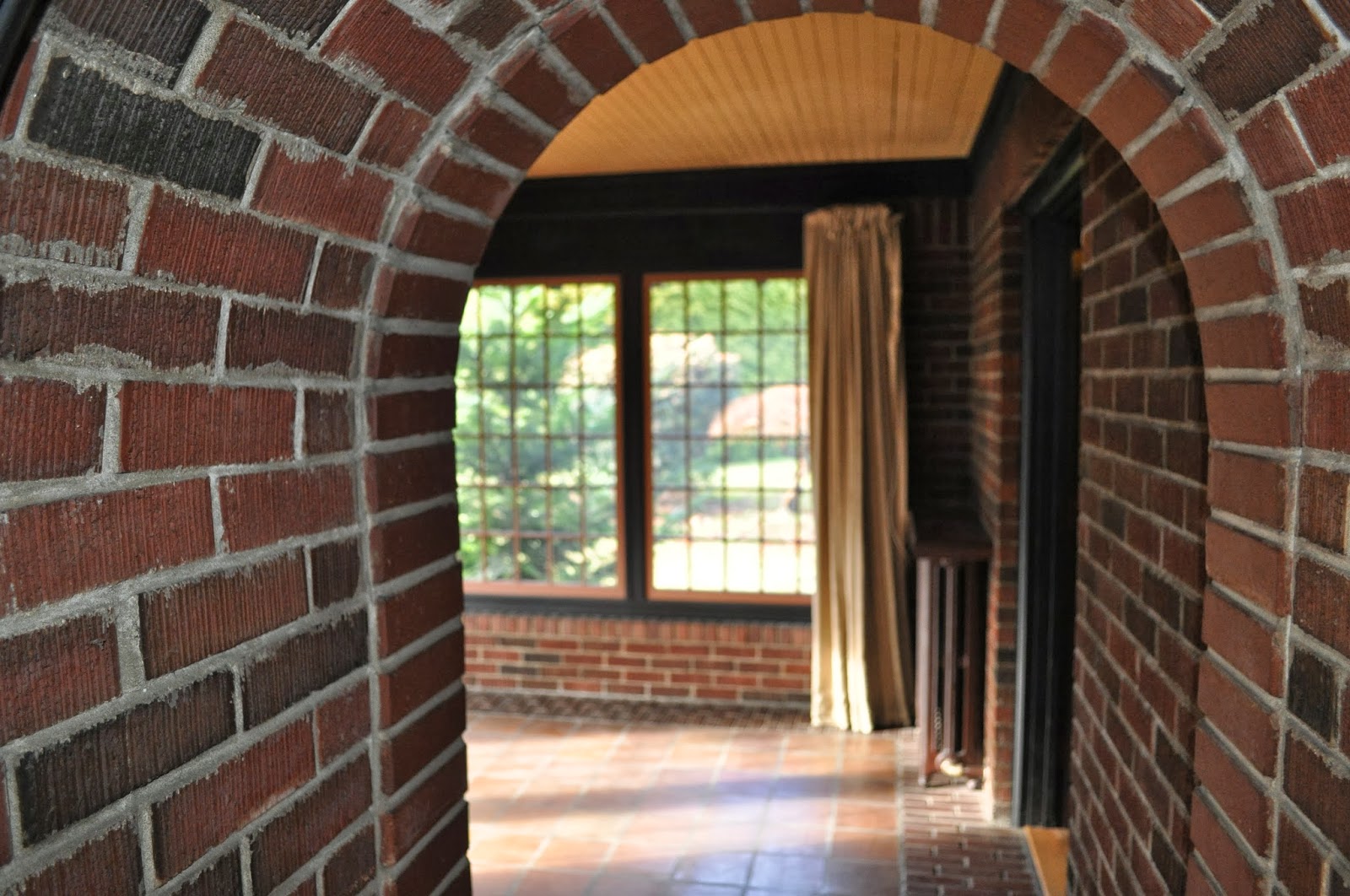
The mansion was designed in the Tudor Revival style, with typical features such as half-timbered gables and notable brickwork and chimneys. Tudor Revival was popular with clients throughout the British Commonwealth as it reflected a long lineage of English country manors, prestige and an aristocratic lifestyle.

Willard and Mary had three daughters — Agnes, Ellen and Gladys. The two eldest daughters — Agnes and Ellen — never married. The third, Gladys, studied law at the University of New Brunswick and was called to the bar in 1918. She became one of Vancouver’s first female lawyers.

Gladys married William Jardine, a local banker, and they had one child — Judith.


Like her two aunts, Judith Jardine never married. She was passionately interested in the arts and teaching (though it’s unclear whether she ever taught professionally). She received an MA in French from UBC in 1947, was Secretary of Vancouver’s Community Arts Council from 1962 to 1979, and co-authored a book on the history of the council.

In 1987, Jardine’s Aunt Ellen — the last of three Kitchen daughters — died, and Jardine inherited WilMar Estate.

Judith Jardine was Willard and Mary Kitchen's only grandchild. In her later years she suffered from dementia.


Apart from that, little else is known of Judith Jardine.

Vancouver Foundation President and CEO Faye Wightman, in a Vancouver Sun article earlier this year, said:
"It's as if she purposely decided to live under the radar."
When her will was read, the UBC Faculty of Medicine, Vancouver School of Theology and Vancouver Foundation were all surprised to find they were included as beneficiaries. Since Jardine’s death in 2006, and as the extent of the Jardine estate became clearer, the beneficiaries realized they had been given about $42 million ($6.4 million, $50,000 and $34 million, respectively).

Jardine's bequest is among the largest charitable donations ever made in B.C.

The bequest was made in memory of Jardine's father William (the fund will be called the W.E. Jardine Memorial Fund) and it is expected to generate about $1.4 million for granting every year. Jardine wanted this money split in two — with $700,000 annually going to BC Conference of the United Church, and $700,000 to Vancouver Foundation.

Wightman said it came as a complete surprise when Jardine's will was read:
"This is someone none of us ever knew. She's someone who the more you learn about, in some ways, the less you seem to know. We have only a few pictures of her. We know she was passionately interested in the arts and teaching and was involved with the Vancouver Arts Council."
After Jardine inherited WilMar and the family fortune in 1987, she lived in the house alone until her death in 2006.

In 2011 the Vancouver Foundation enlisted the services of real estate Larry Yatkowsky to sell the mansion. After sitting vacant for several years with no takers, a renovation and redevelopment plan which will include the construction of five new homes on the extensive property (while seeing the historic Tudor structure is preserved) was tabled and allowed a sale to be brokered.


In some ways is sad to see the property change hands in this manner.

(Oh, to be able to personally procure and restore this magnificent house)

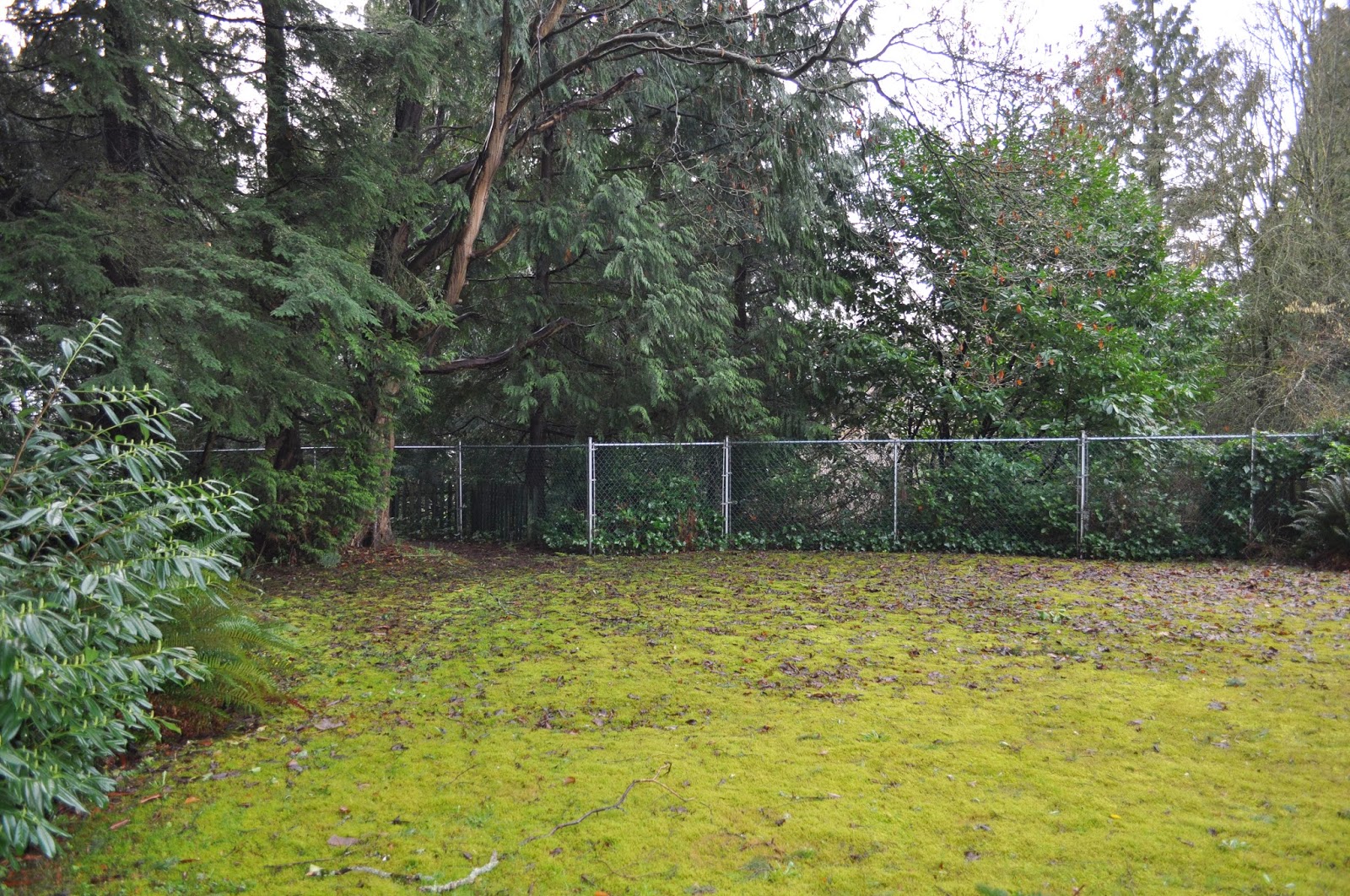
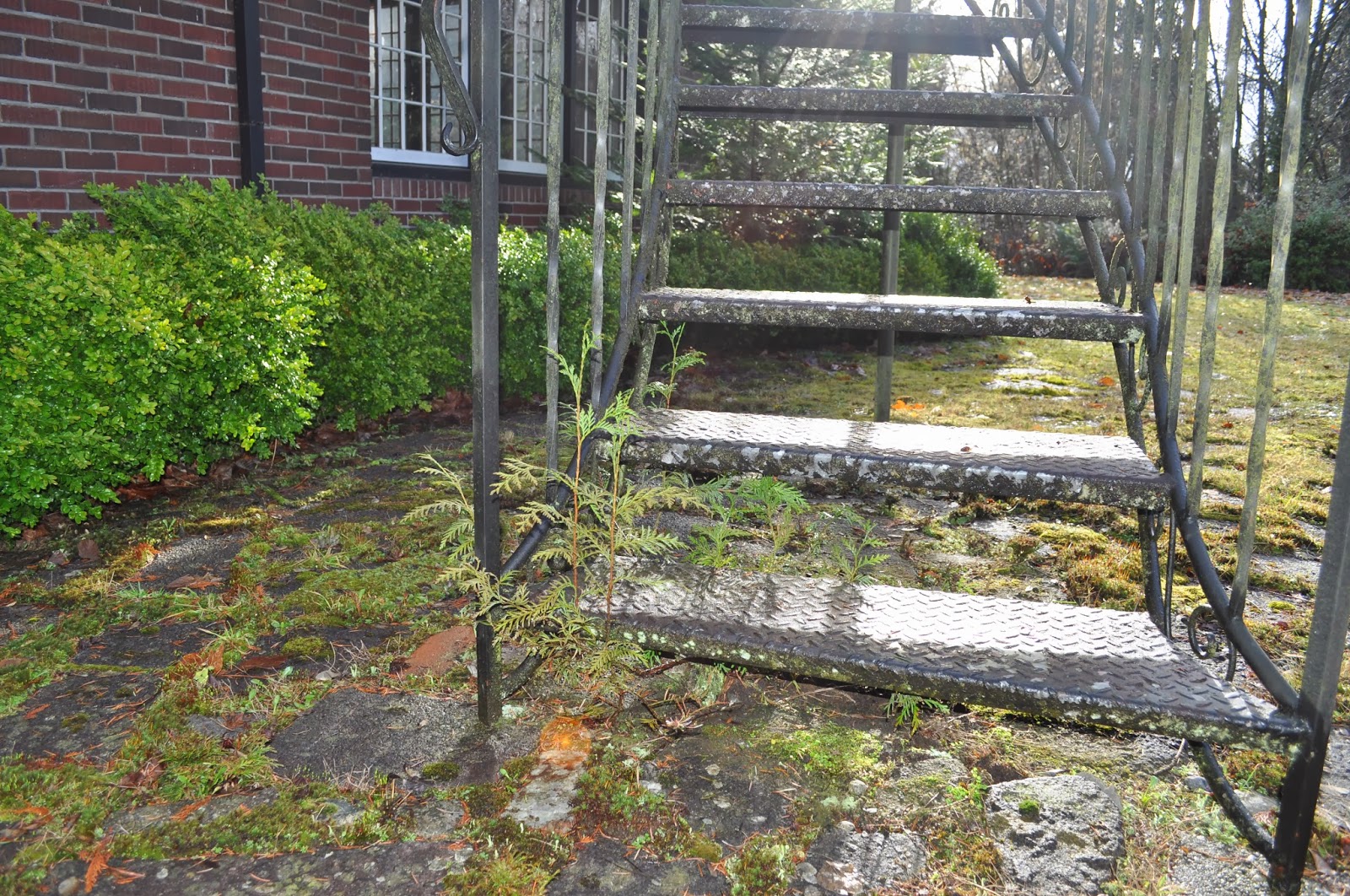
So as news that this wonderful old mansion has officially sold, we offer a few photos of a property long past it's prime and a throwback to another era…

(hat tip Larry Yatkowsky)


==================

Photobucket
Email: village_whisperer@live.ca
Click 'comments' below to contribute to this post.

Please read disclaimer at bottom of blog.

Saturday, December 7, 2013

Before 9/11 there was Dec 7th, 1941


Before September 11th, 2001, the defining moment for a generation was December 7th, 1941… a day the American President Franklin Delano Roosevelt said "would live in infamy".

It's been 72 years. 

Today we remember Pearl Harbor.

==================

Photobucket
Email: village_whisperer@live.ca
Click 'comments' below to contribute to this post.

Please read disclaimer at bottom of blog.

Friday, December 6, 2013

Fri Post #2: Time to rethink government backing of Mortgages in Canada? New guidelines coming?


On November 27th the International Monetary Fund suggested it was time for Canada to rethink its long-time policy of providing blanket backing to insured mortgages.

And today the Wall Street Journal is reporting that federal Finance Minister Jim Flaherty is on board with the International Monetary Fund’s view. Said Flaherty:
"Government-owned Canada Mortgage and Housing Corp. has become “something more grand, I think, than it was intended to be."
The IMF said last week that the system has its advantages, notably in giving the government some ability to guard against market excesses. But it ultimately exposes taxpayers to big risks, should home prices succumb to a sharp correction. The IMF suggested offloading some risk to private-sector lenders.

Flaherty, as we all know, has been tinkering with CMHC for a while.

In his 2012 budget, he gave his finance department authority over CMHC –which for decades had been overseen by the ministry responsible for human resources and social development — and named the top bureaucrat at Finance to the company’s board.

Canada's banking regulator, the Office of Superintendent of Financial Institutions, was also given the authority to regulate CMHC.
Mr. Flaherty said Friday he has sought to limit the risk CMHC poses to the broader government, and to taxpayers, citing government moves to tighten mortgage-insurance regulations four times in the past five years. Those restrictions have put a cap on the amount of liability the CMHC can assume.

OSFI is expected to introduce new guidelines governing mortgage insurers in 2015, CMHC said last week. CMHC also said that, at the behest of Mr. Flaherty, it is now charging a so-called risk fee on mortgages it insures, a move seen as helping compensate the Canadian government for the risk it is exposed to.

==================

Photobucket
Email: village_whisperer@live.ca
Click 'comments' below to contribute to this post.

Please read disclaimer at bottom of blog.


Fri Post #1: Lower Mainland Real Estate Listings numbers


As always, real estate agent Larry Yatkowsky takes the time to provide us with some fabulous data and stats.

The latest chart we would like to bring your attention to is this one profiling total active listings in the Lower Mainland (Greater Vancouver/Fraser Valley/Chilliwack).

A quick gaze at the chart shows we started the year with a higher number of listings outstanding than in the two years previous, that listings soared higher than in 2011 but failed to reach the highs of 2012, and currently sit at roughly the same point as in 2012 (at which point total listings plunge significantly over the Christmas holiday period).

Larry observers:
The 2012 cycle saw Active Listings reduce to a low of 16,486. In contrast, 2011′s level was more severe with an end of cycle total amounting to 15,444 listings while 2010′s cycle surpassed that total at 13,965.

Will this years Active Listing cycle surpasses the low of 2011? It may be close for on the same day in 2011 total active listings amounted to 20,991 – a amount approximating this years total of 20,796.
We will watch over the next three weeks to see what happens.

As always we thank Larry for the data.

==================

Photobucket
Email: village_whisperer@live.ca
Click 'comments' below to contribute to this post.

Please read disclaimer at bottom of blog.


Thursday, December 5, 2013

Thurs Post #2: Bitcoins and Real Estate


Bitcoins.

Have you been following the mania that is the virtual currency known as 'Bitcoins'?


The kiosk, located inside Waves Coffee House at Howe and Smithe Street in downtown Vancouver, attracted its first customers, along with dozens of people who wanted to see how it worked, shortly after it went live at 9 a.m that day.

The automated teller machine is operated by Vancouver-based Bitcoiniacs and Nevada-based Robocoin. Canadian cash can be fed in or taken out from the machine and exchanged for bitcoins on Canada’s VirtEx exchange. The bitcoins will then be transferred to and from the customer’s online bitcoin wallet. The user will also have the option to receive a paper voucher representing the transaction.

The CBC article describes Bitcoin this way:
Bitcoin, which came into existence in 2009, isn’t controlled by any authority such as a central bank. In the recent past, the currency has gained notoriety for its use to buy illicit goods such as drugs on websites such as Silk Road, which was recently shut down by U.S. authorities. However, it is increasingly being accepted by legitimate businesses around the world.
The eye-catching segment of this article is here:
As of Tuesday morning, Bitcoiniacs reported that it was buying bitcoins for $183.21 each and selling them for $207.37 to $211.32. The virtual currency's value has swung wildly in the past year, starting at $13 in January and hitting a high of $266 in April.
'Swung wildly' an understatement.  At the time this post was written, Bitcoin was sitting at $984.00 CDN:


It hit a high, at one point today, of $1160.00 and a low of $900.00. For those who crave trading on volatility, this is heaven.


Will those in real estate start turning their gaze to Bitcoins and the opportunities in that field?

A $1 million flipped in today's volatility would have netted you a profit of $288,888.88 (how's that for HAM oriented lucky numbers?).

If you had parked your $1 million in bitcoin on Oct 29th and pulled it out at the high today, you would have netted a profit of $4,489,305.31.

You have to wonder how long before the real estate speckers are drawn towards this milieu.

Anyone know of any who already have?

==================

Photobucket
Email: village_whisperer@live.ca
Click 'comments' below to contribute to this post.

Please read disclaimer at bottom of blog.

Thur Post #1: Infographic - How the NSA tracks your every movement


(Click on image to enlarge)

As we posted the first time we covered the NSA, this topic is hands down THE most important issue since Watergate.
That little "entertaining" cell phone in your back pocket, which you are so addicted to thanks to all its apps, videos, messaging function and all other cool bells and whistles, that you can't possibly live without? It is simply the definitive NSA tracking beacon used to find where you are at any given moment. The following infographic explains how the NSA does just that…
(hat tip Zerohedge)

==================

Photobucket
Email: village_whisperer@live.ca
Click 'comments' below to contribute to this post.

Please read disclaimer at bottom of blog.

Wednesday, December 4, 2013

Remember the fake mansion which gained notoriety as Canada's most expensive listing?


Time to do a little catch up today.

You all remember our February 27th post about Canada's most expensive listing and it's role as the latest chapter in Vancouver R/E media manipulation?

It was the West Vancouver property we dubbed the 'fake mansion' because the pictures were of a non-existent house.

As the photos went viral around the world, the reality came out about how the  media was duped.

After the hype died down, some semblance of reality set in. On September 3rd we told you how the asking price of the property was reduced by $25 million (or 66% ). That reduction brought the asking price down to $12,888,000 for a property assessed at $6,768,500.

Last month our infamous fake mansion finally sold, we are told, for $8 million.

Did Canada's most expensive listing suffer Canada's greatest price drop?  Or is it another property that sold for way over assessed value?

Like so much in real estate these days, it could be both a glass half empty and a glass half full.

==================

Photobucket
Email: village_whisperer@live.ca
Click 'comments' below to contribute to this post.

Please read disclaimer at bottom of blog.

Tuesday, December 3, 2013

Tues Post #2: 'We ain't got no stinkin housing bubble'


As Vancouver's average price hits a new record high and the International Monetary Fund casts it's eyes on Canada (declaring our's the most over-valued real estate in the world), is this cause for concern?

Not according to our new Bank of Canada Governor.

As reported in yesterday's Financial Post, BOC Governor Stephen Poloz says:
"Canada’s housing market is not in a bubble and not likely to suffer a sudden and sharp correction in prices..."
The central banker was testifying before the Senate banking committee on his latest economic outlook and used the testimony to pointedly disagree with a couple of forecasting organizations that weighed in this week on the Canadian situation — the Fitch Rating service that judged Canada’s housing market as 21% overpriced, and an OECD recommendation that he start raising interest rates in a year’s time.

The Fitch Rating service summarized our housing market this way (click on image to enlarge)…


The Fitch Ratings report concluded that in Canada "… a high level of employment and individual net worth tied to the value of the housing stock, a housing downturn could have serious consequences for the overall economy.”

But Poloz says 'poppycock'. 

He believes the most likely scenario is a soft landing where home prices stabilize. although he acknowledged that an imbalance in the market and high household debt remain key risks.
“Our judgment is (the housing market) is a situation that is improving, this is not a bubble that exists here that would have to be corrected."
Gotta love someone who oozes confidence.

There wouldn't happen to be a 'caveat' in that analysis, would there?
“If there is a disturbance from outside our country that’s another analysis.”
Ahhh… good thing those economic crisis's never originate from outside our borders. So basically, everything's stable until it isn't?

Got it.

==================

Photobucket
Email: village_whisperer@live.ca
Click 'comments' below to contribute to this post.

Please read disclaimer at bottom of blog.

Tues Post #1: Vancouver's Average Price hits a new record high!


As always, real estate agent Larry Yatkowsky is out with the latest statistics right off the bat.

Larry tells us Vancouver’s Detached homes average price in November reached an all time high as November 2013 registered $1,259,775. The previous record was set in May 2011 when the average price recorded was $1,223,421.

Compared to the same period last year, the number of detached homes sold were 47% higher – up from 635 to 934. Inventory dropped by 9%, down from 6,775 to 6,103.

Says Larry:
It’s not a surprise to see Vancouver’s detached home prices reach a new record high. Casual observation suggests continued increases may be the standard for the single family homes. While we all wish to own property in the ‘best’ parts of the city, the limitation of available land precludes this notion. It seems inevitable that ownership of a single family homes in Vancouver will continue to be ever more precious.

Dreams don’t always come true. Visions where everyone should own a detached home on a plot of land in Vancouver may is a different reality. Ever increasing prices for detached properties re-confirm that Vancouver is not egalitarian.


==================

Photobucket
Email: village_whisperer@live.ca
Click 'comments' below to contribute to this post.

Please read disclaimer at bottom of blog.

Monday, December 2, 2013

Monday Post #2: "Beware those housing statistics," says Fraser Valley journalist


Anyone who follows the real estate blogs in Canada knows the bear blogs have long questioned the statistics churned out by the real estate boards.

The industry's HPI is dubbed a 'franken' number and blogosphere champions like Garth Turner have long questioned the reliability of those stats.

The latest to cast aspersions is Win Wachsmann. Author, journalist, syndicated columnist, filmmaker, publisher and businessman, Wachsmann makes his home in the Fraser Valley of British Columbia.

And in a column today in the Huffington Post he asks, "What's Happening to Housing Statistics in Canada?"
In recent months the Canadian Real Estate Association (CREA) and its various provincial boards have come under increasing criticism for manipulating sales and price figures.

Their favorite word? Average. They even have a page called the National Average Price Map.
Wachsmann wonders aloud about this 'average':
Does "average" refer to median (half the numbers are higher and half are lower? (3,4,5,6,7; i.e. 2 numbers are lower and 2 are higher.)

Or does "average" refer to arithmetic mean - where the sum of the values is divided by the number of values.? (In other words the average of 2,2,1,4 & 16 is 5; i.e. 25/5)
Indeed. Win continues…
While studying mathematics and science in University, I was introduced to a marvelous book called How to Lie With Statistics by Darrell Huff.
Huff details how to spot data (statistical) manipulation and how to read data analysis properly so that you will not be misled.

It seems that the folks in the Real Estate Associations and Boards have been buying this book by the case lot as their data manipulation has been elevated to a new art form.

Not only are their numbers suspect, but the language used on their website and in their press releases also easily exceeds the Statistical Hyperbolic Indicative Terminology index.

Here's an example:

"While the Finance Minister will no doubt continue to keep a close eye on Canadian housing markets for signs of overheating as interest rates remain low, October sales results may provide him with reassurance that tightened mortgage regulations and lending guidelines are working as intended." said Gregory Klump, CREA's Chief Economist.

Love those rose-colored glasses Gregory.

So what is happening with housing statistics in Canada?

For those looking for easy answers, check out the mainstream media, who seem to be in the press release rewriting mode. In some cases they don't even disguise their laziness. It's Press Release Verbatim!

That probably works for your maiden aunt and those Low Information Readers.

For the rest, you will have to do some digging to come up with the real Real Estate Data.

Don't go making huge real estate buying decisions based on data released by realtors and Real Estate Associations whose main goal is to separate you from your hard-earned money. By buying/upgrading/enhancing your lifestyle.

Is now a good time to buy? Will prices ever go down? Can I afford to wait?

If you are an affluent and successful boomer, perhaps now is the time to sell. Before all the other boomers get wise to a declining market?

Evaluate all those housing statistics carefully.

Who is promoting that data? What's in it for them? Are they looking out for you? Or for themselves?

Do they have a vested interest?
For Win (and many in the blogosphere) the answer is obvious.

==================

Photobucket
Email: village_whisperer@live.ca
Click 'comments' below to contribute to this post.

Please read disclaimer at bottom of blog.

Monday Post #1: Richmond Vancouver a seller's market? Realtor responds "whoaaa…"


UPDATE: The data in Richmond Realtor Shuchat's post is about Vancouver, not Richmond, as originally posted on this blog. The reference to Richmond has been removed (hat tip A. Shuchat).

Yesterday we told you how Realtor Alphabet Arnie Shuchat had declared Vancouver "a seller's market"

But before we break out in a chorus of 'happy days are here again', AA would like to clarify:
Thanks for the post and quote... but whoaaa..... Whisperer, easy on my conclusions. I pointed out a trend using just one simple metric. Obviously there are others. A "Seller's Delusion Ratio" of 71% is still not the 29% of February 2011. It is 3 times worse. The noteworthy point here is the trend.

It was certainly a seller's market at 29% and it was certainly a buyer's market at 244%. 
I am not aware of anybody else who has used this metric to define a market as a buyer or seller's market and I cannot say for sure at what point in the SDR ratio the market is a buyer or a seller's market.

It is the recent trend to lower ratios which caused the observation. Obviously other metrics need to be examined as well.
Guess we will have to hold off on the string of bullish real estate posts we had planned.

==================

Photobucket
Email: village_whisperer@live.ca
Click 'comments' below to contribute to this post.

Please read disclaimer at bottom of blog.

Sunday, December 1, 2013

Alphabet Arnie declares that the Richmond Vancouver Real Estate market is now a 'sellers market' - UPDATED


UPDATE: The data in Richmond Realtor Shuchat's post is about Vancouver, not Richmond, as originally posted on this blog. The reference to Richmond has been removed (hat tip A. Shuchat).

Local Richmond realtor, Arnold Shuchat,  is out with his latest market analysis and he declares the Vancouver market has turned.  Now it's a seller's market:
If one wanted a weather vane to see where the real estate market winds are blowing, this would be as close to it as one could get. I designed the Seller's Delusion Index to track sellers' frustration over time, with the hypotheses being that the more expired and terminated listings there are as a ratio to sales, the greater the downward pressure on real estate prices. A seller has two options: cut his price or take it off the market. One results in a sale and the other a terminated listing.

As an historical measure, (Terminated + Expired listings) divided by number of sales in or about February of 2011 an accepted market high point, were running close to historic lows of about 27% depending on property type. At the worst recent time since then, they were running around 244%. That is akin to saying that when things are "hot" sellers had a 1 in 3 chance of being frustrated, whereas when things cooled down, they were 9 times more likely to be frustrated.

As one can see from the chart below, sellers' expectation are being more fully met now and the trend is leaning towards a seller's market once again. This table supercedes all previous ones as the sufficient time lapse following the months' end assures a more accurate set of numbers to allow for complete reporting of sales, terminated and expired listings.
Hopefully a turning market will keep this real estate agent busy enough so that he doesn't have time to do any more video's…


Hat tip: Son of Ponzi and crash cow
==================

Photobucket
Email: village_whisperer@live.ca
Click 'comments' below to contribute to this post.

Please read disclaimer at bottom of blog.

Saturday, November 23, 2013

BC Foreclosure Update for week ending Nov. 22, 2013


BC Foreclosure Update for week ending Nov. 22, 2013 from Ham Solo over on Vancouver Condo Info.

==================

Photobucket
Email: village_whisperer@live.ca
Click 'comments' below to contribute to this post.

Please read disclaimer at bottom of blog.

Friday, November 22, 2013

It was 50 years ago today...


This unique clip is from CBS television on November 22, 1963.  At approximately the 10:00 mark, the soap opera "As the World Turns" is interrupted with the famous CBS news bulletin.  After the initial bulletin, coverage continues at about the 13:00 minute mark.

Next is the announcement of Kennedy's death:


And from Oliver Stone's JFK:


==================

Photobucket
Email: village_whisperer@live.ca
Click 'comments' below to contribute to this post.

Please read disclaimer at bottom of blog.

Tuesday, November 19, 2013

The new twist on gullible?


Ad for Trump Tower in Vancouver.  Their slogan: "The new twist on Luxury"

Does this really sell condo's?

==================

Photobucket
Email: village_whisperer@live.ca
Click 'comments' below to contribute to this post.

Please read disclaimer at bottom of blog.

Sunday, November 10, 2013

Remembrance Day 2013


At 11 am on the 11th of November 1918, European hostilities officially paused after the German government accepted the terms of armistice given them by the allied forces.

The following year the cease fire was made permanent with the signing of the Treaty of Versailles, but it is the 11th of the 11th that has become the symbolic time of peace.

The 11th of November was originally called Armistice Day, but was changed to Remembrance Day after World War II as a gesture to commemorate all who have given their lives serving our great country.

They shall grow not old as we that are left grow old.
Age shall not weary them, nor the years condemn
At the going down of the sun and in the morning
We will remember them.

Today and tomorrow we pause to remember those Canadians who lost their lives in service to our wonderful country.

This ultimate sacrifice simply cannot be framed in any form that does justice. All we can do is join those today who pause... remember... and say 'thank you'.


==================

Photobucket
Email: village_whisperer@live.ca
Click 'comments' below to contribute to this post.

Please read disclaimer at bottom of blog.

Thursday, November 7, 2013

"If you want affordable housing go to Detroit" - Sauder School of Business


Posts have been few lately due to circumstances beyond our control, but we couldn't let this latest gem go by unreported.


The Sun reports that the simple numbers on housing affordability in Metro Vancouver are unequivocally alarming: It costs just over 8½ times the median after-tax household income of $61,975 to buy a home for the median price of $517,677.34.

Compared to the norm in banking circles just a generation or two ago when low-equity borrowers were likely to be denied a mortgage if the cost of the house they wanted was more than three times what they earned in a year, this seems insane.

But the article argues that if you look at the issue more closely, the message is nuanced and somewhat mixed.
Today's 8.5-to-one ratio is, to be sure, quite a bit worse than 20 years ago when it was 6.6 to one, and even worse still than the 5.9 to one figure in 2003. But ...

These historical ratios, though lower than today's, were still very high by any conventional measure, and they never once dipped to a low or even "normal" level during the entire duration of the last two decades. Yet Vancouverites still coped, and the population still grew by well over 500,000 in that 20-year period...

Half the reason for a high priceto-income ratio is not the cost of a home, but rather the lacklustre growth of personal incomes in Metro Vancouver over recent years to the point where we trail most major cities in Canada. If this turns around - and, once again, there are no guarantees - the affordability squeeze will ease.
The central message?
Robert Helsley, dean of the Sauder School of Business, added an additional perspective when he spoke last week at a UBC-sponsored symposium on affordability. He suggested Vancouver's high home prices are "the price of admission" to this amenity-rich little corner of the world.

Similarly highly priced real estate is found in other places where people really want to live - Hong Kong, San Francisco, London and New York, to name a few.

"If you want affordable housing," Helsley said, "go to Detroit."
Instead of calls to halt the easy credit and low interest rates that fuelled and created the unaffordability to begin with, we get sermons to 'let them eat cake'.

Marvellous.

==================

Photobucket
Email: village_whisperer@live.ca
Click 'comments' below to contribute to this post.

Please read disclaimer at bottom of blog.

Friday, November 1, 2013

BC Foreclosure Update


Over on Vancouver Condo Info, Ham Solo shares the data from BC Foreclosure filings for Oct. 31, 2013 and month to date totals. From Ham:
At the end of the first month of daily data. Vancouver stayed running at a fairly steady pace of six filings per working day. So big picture, what is going on with British Columbia foreclosures? First, I think one needs to understand the data. Courts aren’t located in every municipality, so “New Westminster” foreclosures probably include Port Moody or Coquitlam, while “Nanaimo” might include Qualicum Beach etc. That being said we can get a pretty good look at what is going on regionally.

The basic situation is that the periphery is doing worse than the big city. If I annualize the data by population, the Lower Mainland as a whole is running at about 0.7 annual foreclosures per 1000 population. That compares to Vancouver Island with a run-rate of 1.3 foreclosures/1000 pop; Okanagan at 1.8 foreclosures/1000 pop; and Kootenays and North maybe running 2-3 foreclosures/1000 pop with those last two regions most susceptible to problems in counting and defining the right regional population number.

Turning to lenders, I think the basic model of all the banks, roughly in proportion to retail market share, is to write any old mortgage at any old level to someone that can be covered by CMHC/Genworth wrappers. There is no bank that seems to be extra careful … Royal’s share this month is a bit lower than I would have expected, CIBC’s a little higher. The specialty mortgage co’s are active across the province and must be punching much higher than their weight in terms of foreclosure volumes to mortgage assets. Credit unions, whom I thought might be the loosest lenders of the bunch, seem to be there in about expected market share.

We clearly are not in a meltdown. I’d be interested if other readers have the data on what the foreclosure numbers per 1000 pop got to in various US states. However, we have a good sense of the base. This data series will probably spike at some point, maybe beginning next month, maybe beginning in 3 years, I can’t say. Like others, I’ve been surprised at how well prices have held up and how few foreclosures have occurred to this point. However, I suspect that 20-40% of current “homeowners” would be in serious trouble at either in a 5% interest rate environment or in a material recession regardless of the rate picture.

As there is a little repetition in the daily numbers, going forward I will share the data weekly.
A big thanks to Ham for his efforts.

==================

Photobucket
Email: village_whisperer@live.ca
Click 'comments' below to contribute to this post.

Please read disclaimer at bottom of blog.