Today the Olympic Torch came through White Rock, Delta and ended in Richmond at the 'O-Zone', an Olympic celebration venue. There were over 30,000 people there and the evening ended with Rick Hansen taking the Olympic Flame to the community cauldron.
CTV was on hand broadcasting the festivities. Here Tamara Taggart and Pamela Martin await their cue.
The irrational march upward carries on and not just in Vancouver proper.
Today's treatsie is this 5 bedroom, 3 bathroom 3,000 sq. ft. home sitting on a 12,160 sq. ft. lot is the suburb of Coquitlam.
You can see the realtor's listing here (with many more photos).
According to listing agent Josh Bath, this home hit the market last Friday. On the weekend 120 potential buyers came through and the house received 15 offers.
The house was last sold in 1990 for $200,000.
On Friday it was listed for sale at $639,900.
So what did the feeding frenzy produce? A final sale of $688,500... $48,600 over asking price.
Said the agent, “The previous owners of this home owned it for 19 years and after raising their family and renovating, decided to downsize to a town home. The features that really sold this home were definitely the neighbourhood and the yard."
No Josh, the features that really sold this home were ultra low interest rates and a 'buy now or be priced out forever' mindset.
Olympic Pics (click on images to enlarge)
It was a picture postcard sunny day in Vancouver today and the views were stunning. We do this to tease the media. Fear not, tho... it will piss rain for the Opening Ceremonies and Day 1 on Friday.
Below is a picture of the newly set up German House right next to the Seabus.
Next is a shot from near the Cambie Bridge. This is the east end of False Creek. Science World (the big dome) is transformed into Russia House (and is promoting the Sochi 2014 Winter Olympics). The big Q is where Quebec House is. On the left is GM Place, renamed Canada Hockey Place for the Olympics.
The big draw hockey games are at Canada Hockey Place. Other games are also at the new UBC Thunderbird Arena. Below is a picture taken today of the transformed Arena, ready for the Games.
Even the police are out enjoying the Sun at Thunderbird Arena.
Speaking of Russia House, here is the countdown clock to the 2014 Winter Games.
I notice that the Russian athletes have now staked out their turf at the Village.
The pics above are from the volunteers entering BC Place for the Opening Ceremonies dress rehearsal today. Click on them to enlarge.
The next pics are of a whole raft of searchlights set up on either side of the Burrard Bridge as it heads into downtown Vancouver. The lights are synchronized to perform a light show.
Finally... a pic from the community cauldron in Surrey tonight. The cauldron is set up each night as the Olympic Torch relay concludes for the day. The torch is now in the suburbs of Vancouver.
A cornucopia of things for you as I press my nose against the window of the world today. It's also only 7 days before the Games.
Olympic Games
Since I will be in Downtown Vancouver during the Games, I hope to bring you some streetshot photos of things going on outside the venues - no promises though.
Less than flattering news articles on the downtown eastside continue. Here's one from the Globe and Mail.
Meanwhile the lack of snow on Cypruss is fodder for the late night talk show circuit. I mean, honestly, anyone who lives here knows that it's no great surprise there is no snow locally in February. Why on earth isn't every alpine event up at Whistler?
A sports segment on ESPN shared that sentiment when talking about Cypress Mountain. The host of the segment said, "This isn't the big downhill mountain, this is some dopey little mountain where they're going to hold their little dopey X Games events."
Sigh. Too true.
Interest Rates
The people at the Council on Foreign Relations speculate that US interest rates on Treasury debt will be increasing around the end of the first quarter if the Fed discontinues its monetization of mortgage debt.
As the Fed has essentially purchased ALL new US Treasury issuance since 2009, that seems to be a reasonable bet (hattip: Jesse's Café Américain).
"The Federal Reserve plans to stop buying securities issued by government housing loan agencies Fannie Mae and Freddie Mac by the end of the first quarter.
This is not only likely to push up mortgage rates; Treasury rates should rise as well. Throughout 2009, the private sector sold a portion of their agency holdings to the Fed and used those funds to buy Treasury's.
Once the Fed’s agency purchases stop, this private sector portfolio shift will end, removing a major source of demand in the Treasury market.
As the chart shows, since the start of 2009 the Fed has bought or financed the entire increase in Treasury issuance. As Fed purchases slow and Treasury issuance continues at a high level, interest rates will have to move up to attract new buyers."
PIIGS
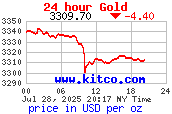
Gold has plunged downward as the US dollar surges against the Euro yesterday and today.
Why is this happening? The big story is the sovereign debt concerns of the impolitely nicknamed PIIGS. The PIIGS are Portugal, Italy, Ireland, Greece and Spain.
Driving the flight to the US dollar is concerns focusing on debt to GDP percentage of these countries.
What's so truly bizarre, however, is that the United States stands directly in the middle of the PIGS nations on the debt to GDP percentage scale!
In the US, state after state is facing serious budget problems. The latest is Connecticut as this report notes. "The signs of economic distress are everywhere -- in our towns, our homes, our businesses and places of worship. Connecticut residents are paying attention, and elected state officials who ignore what they are telling us do so at their own peril. If we thought that passing a state budget was difficult last year, just wait. This year's three-month legislative session will be brutal."
So... if the argument against the PIGS is the debt to GDP percentage. The exact same argument would place the US dollar in a crisis position.
Not to hard to see what lies ahead here.
It's becoming a race to the bottom, which ultimately is what makes currency values what they are. Watch for similar arguments about the size of the debt to GDP ratio to soon batter the US dollar.
Froogle Scott Chronicles
The next two instalments of the Froogle Scott Chronicles are out over at VREAA.
Part 2: Up, Up, Up: Winning the Real Estate Lottery can be read here.
Part 3: Priced Out Forever? Vancouver Renters and Basement Suites can be read here.
That's it for now. Updates may or may not be added.
I have lived in this city for almost 40 years now.
And there is one thing that has always stood out for me... and that is the dramatically different perception you can have of this city based on the way you travel to the downtown core.
Drive down Granville or Cambie Steet, and the city rises up on a sunny day as a spectacular jewel nestled against the mountains.
Drive along Kingsway or Hastings, and the city is a slum.
That dichotomy will take on mythic proportions in the coming weeks.
I can't find the link right now, but I read one account of a journalist visiting Vancouver and he talked about his anticipation in seeing this fabulous city. But leaving his hotel in Burnaby, he would drive down Kingsway and loop around the downtown eastside, never finding the Vancouver of the travel magazines.
I know exactly what he means.
Next week NBC will broadcast Vancouver to the world. Now, Dick Ebersol (of NBC Sports) has already made it clear that the main network of the NBC will do nothing but display Vancouver in all it's stunning glory. NBC does that with every host city.
But contrast that approach with this article from MSNBC.
For those who think the Olympics will be a non-stop real estate advertisment for the Village on the Edge of the Rainforest, this is a taste of what many media outlets will be reporting this week.
Canada’s Olympic city has notorious skid row Vancouver’s darker side emerges from district known as ‘Pains and Wastes’
(note to NBC headline writer: that's 'Pain and Wastings' - the writer gets is right in the article)
VANCOUVER, British Columbia - Five blocks away from the venue for Vancouver's Olympic opening ceremonies, four grizzled addicts huddle in the rain, injecting themselves with heroin behind a trash bin.
Welcome to Downtown Eastside. Here, life is gritty, volatile and the slightest misstep can invite brutal retaliation.
"It's a jungle," said Glen, a 49-year-old heroin addict who goes by the street name Trouble. "You want to get out of here."
As Vancouver prepares for the Olympics and the descent of the world's media, the Downtown Eastside remains a huge problem — 15 square blocks of despair, squalid rooming houses and alleys populated by thousands of addicts, the homeless, the mentally ill and the drug dealers who prey on them.
This neighborhood is the most concentrated drug and poverty ghetto in North America, with high use of heroin, cocaine and methamphetamine, according to criminologist Benedikt Fischer of Simon Fraser University. It's also the only place in North America where drug addicts can shoot heroin into their veins at an officially sanctioned injection site.
'Pain and Wastings'
At the center of the neighborhood is a neoclassical building endowed by philanthropist Andrew Carnegie in 1903. Behind it, dealers and pimps hawk drugs and women in a filthy alley. And on its front steps is Vancouver's largest open-air drug market, at the intersection of Main and Hastings streets— dubbed "Pain and Wastings" by locals.
Across the street is Vancouver's biggest police station. Police Const. Lindsey Houghton said officers often find themselves in the role of social workers while continuing to target the drug trade. About 49 percent of Downtown Eastside calls are related to mental health, according to the Vancouver Police Department.
"It's a tremendous challenge that goes beyond the traditional scope of policing," Houghton said.
The International Olympic Committee's bid evaluation team didn't see the Downtown Eastside when it assessed Vancouver's bid in 2003. When it came time to tour Vancouver venues, the IOC's bus took a wide detour around the neighborhood.
The bid evaluation team did see the scenic but treacherous highway from Vancouver to Whistler, host of alpine and sliding events. While about $500 million has been spent on the road, the Downtown Eastside remains much the same.
As they did in 2003, welfare recipients still line up once a month to receive their welfare checks. Welfare Wednesday is known as Mardi Gras in the area, the recipients called "two-day millionaires." Needle exchange staff work on the welfare lines.
'Insane'
The area gained international attention when pig farmer Robert Pickton was arrested in 2002 and charged with the deaths of 26 prostitutes and addicts from the Downtown Eastside, in what police say is Canada's worst serial murder case. He killed and butchered them at his suburban farm. Some remains he fed to pigs. The rest went to a rendering plant.
Mona Wilson's head, hands and feet were found in a bucket at Pickton's farm. Her brother, Jason Fleury, called the Downtown Eastside a time bomb and accused officials of doing nothing to defuse it while spending millions on the Olympics.
"It's crazy. It's insane," Fleury said.
Prostitution rights activist Jamie Lee Hamilton said little has been done to curb violence against prostitutes since Pickton's arrest.
"There is this perception that all the violence ended when Pickton was arrested," Hamilton said. "We know it's hunting grounds down there, and we're doing nothing about it. The women, the men and the transgendered are living prey."
Due in part to rampant intravenous drug use, the area's HIV rate is the worst in the developed world, said International AIDS Society president Dr. Julio Montaner. The HIV rate qualifies the Downtown Eastside for World Health Organization epidemic status, he said.
Montaner said the combination of drug and health programs as well as housing initiatives are beginning to slow the crisis. But progress may be halted by the increasing violence of Vancouver's drug trade, as cocaine prices skyrocket in the wake of a Mexican drug-cartel crackdown.
Critics allege the Downtown Eastside will be sanitized during the Games under recently passed legislation that allows police to force the homeless into shelters in cold weather. That would violate bid assurances, they say.
"Nobody has a right to move those people simply to accommodate a better visual image for the Olympics," said provincial legislative housing critic Shane Simpson.
Vancouver Organizing Committee vice president of sustainability Linda Coady said the issue has nothing to do with the organizing committee, and that VANOC's interest is what goes on inside Games' venues.
"Outside is the domain of the Vancouver Police Department," Coady said.
Meanwhile, the safe injection site in the Downtown Eastside is the busiest in the world, with about 500 supervised injections a day, according to Insite supervisor Russ Maynard. Addicts shoot up at 12 booths with mirrors on the walls so that nurses on a raised platform can see them.
Maynard said by the time an addict gets to the Downtown Eastside, they are totally dysfunctional. Even trying to get help is hard, he said, as pay phones are used constantly to make drug deals.
"You could get beat up for tying up a phone for five minutes," he said.
He said 90 percent of people using Insite have Hepatitis C. The national rate is less than one percent.
Insite has operated for six years under an exemption from Canada's health laws. The federal government's attempt to close Insite ended Jan. 15 when the British Columbia Court of Appeal ruled addicts had a constitutional right to health care. Whether the case winds before in the Supreme Court of Canada remains to be seen.
MSNBC has taken a realistic, cold, hard look at the real downtown Vancouver. The view that so many locals simply refuse to acknowledge and put blinders on for.
Somehow I don't imagine excerpts of the MSNBC story making it's way into any Bob Rennie literature on the Woodwards development.
It comes as no surprise to readers of this blog to know that I firmly believe that higher interest rates loom in the not too distant future.
And when that circumstance comes to pass, Canadians are gonna get crushed financially.
Just look at how much debt Canadian households are carrying relative to their personal disposable income.
We like to say we are different from Americans, but it's hard to buy into that malarkey when you study the Bank of Canada (BOC) data. According to the BOC, the debt-to-income ratio of households in this country stood at 142% in the second quarter of 2009. That means for every dollar Canadians earned, Canadians owed $1.42 in debt.
In 2005 that figure stood at 116%.
Not only is that debt level exploding, but the BOC estimates that the ratio will rise to 160% in two years!
That's basically where it is for American households. And when it comes to household debt relative to GDP, Canadians and Americans are already neck and neck.
Shockingly, Canada is virtually the only country where households have taken on more debt during this recession. While total household debt in foreclosure-ravaged America shrank 1.7% over the last year, debt levels here jumped 7%. According to Statistics Canada, in November personal lines of credit surged 20% from the year before, loans for home renovations were up 31%, and balances of credit cards jumped another 6.9%.
But by far the most interesting statistic is that, in dollar terms, most of the increase in household debt has come as the result of the huge mortgages people are taking out to buy homes at today’s soaring prices. Over the past two difficult years of the economy, the total residential mortgage debt load in Canada ballooned 18.
“We’re the anomaly in global markets,” says Derek Holt, an economist at Scotia Capital. “We continue to climb to new highs with house prices and we haven’t seen any deleveraging among households. What’s so special about Canada that we should be experiencing this while every other industrialized economy went down and stayed down?”
Now we've talked at length here about how the BOC has been pounding warning drums to warn Canadians not to get used to the abnormally low interest rates of the last year.
And the 800lb gorilla in the room is those skyrocketing debt levels.
When interest rates begin to rise from their record lows (have I mentioned how this is, IMHO, a certainty?), borrowing costs will rise and hundreds of thousands of Canadian families will face a brutal cash crunch.
How bad is it going to be?
Recall that the BOC conducted a series of theoretical stress tests to see how Canadian households will fare should interest rates rise.
I wasn't aware of the values applied, but I am now advised that the stress tests analyzed what would happen if rates rose between 3.2% and 4.5% by mid-2012.
With the BOC benchmark rate currently at just 0.25 per cent, that is a sizable jump. And when a household’s debt-to-service ratio, a measure of monthly payments relative to income, breaks past the 40% mark, it’s considered to be “financially vulnerable” to financial shock.
What the bank found in its review was that if rates rose to the higher level, 9.6% of households would find themselves in that danger zone.
Amazingly, the BOC's test scenario of a jump in rates to even as high as 4.5% would still leave mortgage rates low by historical standards. Especially if, as many fear, the trillions of dollars in emergency liquidity that’s been pumped into the economy sparks inflation. But according to Ian Lee, a former mortgage banker turned Carleton University professor, given today’s insanely low levels, rates don’t need to jump that much to wreak havoc on Canada’s debtor class. “I was in the industry when mortgage rates went through the roof and I was throwing middle class owners out of their homes,” he says. “We’ve seen this movie before."
Yes we have... and it wasn't pretty.
In fact we only have to look across the Pacific Ocean for a preview of how our future will be playing out.
In this Bloomberg story we get a glimpse of what is happening in Australia. The Aussies, like Canada, took emergency measures to stave off a collapse in their real estate industry.
And just like in Canada, the result was rampant price speculation in real estate.
But when the incentives to buy ended and now that interest rates have risen (the Australian central bank rate is now 3.25%), the Australian real estate market is starting to get hit.
As the Bloomberg story notes, rising rates are starting to trigger default conditions on Australian mortgages.
Last week a survey found 45% of all buyers who purchased in the last 18 months are under severe mortgage stress, with many forced to use credit cards to keep up their home loans.
And - what a surprise - when we take a closer look we find that Australians have a debt-to-disposable income ratio of 156% - almost identical to Canada's (145%).
The scary thing is that the 3.25% Australian central bank rate is nowhere near to topping out.
It's been a busy week so you will excuse the absence of posts. And as the games approach sporadic may become the norm, so I apologize in advance.
Interesting phone call from a colleague on the weekend. He reads the blog and was keen for my comments on the plunging price of gold.
Was I wrong about my prediction for 2010?
"Nope!"... I told him in that a 'matter-of-fact' way.
In what will become the theme of the 2010's, the American President has started to discuss the fundamental issue of our time: American debt.
Obama's candor on the issue this week lead to this article in the New York Times which analyzed Congressional Budget Office reports going back almost a decade.
The Times was trying to understand how the federal government came to be far deeper in debt than it has been since the years just after World War II.
The article included this terrific chart demonstrating succinctly the endless abyss that the actual US budget is becoming. It shows just how deep the sovereign debt rabbit hole goes. (click on image to enlarge)
Their observation? "This debt will constrain the country’s choices for years and could end up doing serious economic damage if foreign lenders become unwilling to finance it."
Those American politicians who paint rosy expectations for a surplus are dreaming in technicolour - the likelihood that the US can claw its way back out of the hole at this point are slim to none. Even David Gergen, presidential advisor during the administrations of Nixon, Ford, Reagan, and Clinton, was moved to comment on CNN yesterday that the debt is massive and threatens to trigger a dollar collapse and/or bankruptcy. He doesn't see either side - Democrat or Republican - having the political will to deal with the problem.
Meanwhile, at the other end of the spectrum, there is the US Federal Reserve.
Chairman, Ben Bernanke, is brewing further sorcerer-style plans to hopefully control and manipulate interest rates. The latest this weenie is now considering involves adopting a new benchmark interest rate plan to replace the one they’ve used for the last two decades.
The Fed is floundering for a way to have an effective policy rate in place when it starts to raise interest rates from record lows to keep inflation in check. Policy makers are concerned that the Fed funds rate may fail to control inflation as the economy recovers.
“One option you might want to consider is that our policy rate is the interest rate on excess reserves and we let the fed funds rate trade with some spread to that,” Richmond Fed President Jeffrey Lacker told reporters on Jan. 8 in Linthicum, Maryland.
The choice of a benchmark is the “front line of defense against inflation, and also it’s at the heart of the central bank being able to precisely and flexibly guide interest-rate policy in the recovery,” said Marvin Goodfriend, a former Fed economist.
In the past, the Fed had controlled the prime interest rate by buying or selling Treasury securities, adding or withdrawing cash from the system. That mechanism broke down when the Fed started flooding the system with cash after the bankruptcy of Lehman Brothers.
What the Federal Reserve is planning to do is pay banks a higher rate on interest on the funds the banks have been given in these bailouts, so that the banks keep the money at the Federal Reserve. By raising the deposit rate, now at 0.25 percent, officials reckon banks will keep money at the Fed and not stoke inflation by lending out too much as the economy recovers.
The deposit rate would help set a floor under the fed funds rate because the Fed would lock up funds by offering a fixed rate of interest for a defined period and prohibiting early withdrawals.
“In general, banks will not lend funds in the money market at an interest rate lower than the rate they can earn risk-free at the Federal Reserve,” Bernanke said in an October speech in Washington.
But as William Ford, a former Atlanta Fed president at Middle Tennessee State University in Murfreesboro said, there could be complications to using the deposit rate. "Banks may be able to generate more revenue by lending at prime rate rather than by earning interest at the Fed."
As the world loses confidence in the United State's finances, there are so many variables introduced that the Federal Reserve is playing with matches as it sits on a massive powderkeg of stimulus money.
I guess it comes down to having supreme faith in Bernanke's ability to predict what is coming and dance his way around it successfully.
And Ben's foresight is Stirling, isn't it?
One of the main problems is that Bernanke is only focused on money supply, and only on the money supply in the bank reserves.
But money supply is relative to demand, and potential money supply to potential demand.
There is a funny thing about potential money supply. It can grow quietly in assets, stored in investments and other less repositories of value, and then spring into action relatively more quickly, when wealth is converted to money, the medium of exchange.
Is is well known that many banks are playing the carry trade with funds freed up by having Fed money on reserve (and with the money they are generating for themselves from the interest the Fed is paying on those reserves). The huge profits they are collecting do not get stored in the reserve funds they have been given.
At some point they will inject this money into the economy in the form of lending. How will the US Federal Reserve control THAT when these funds start to enter the money supply?
(Answer... the exact same way Volcker did in the late 70s, early 80s).
Monetary inflation is deceptively simple, and immensely more complicated than the average person can allow, and the pundit will admit.
As another blogger I follow posted:
"Debt/credit are one means of financing the enterprise. There is also equity. But a wise person will look at the organically generated flows of wealth in valuing the shares. Are you consuming more than you are creating? What are the future prospects for this flow of wealth? If there is no prospect of net positive wealth creation, then you are living on borrowed time, in a castle of sand, no matter how good the accounting tricks you are using to hide it from the shareholders.
One might look an an unconnected car battery and say, 'oh look it is benign.' But grab hold of each of its terminals with your bare hands while grounded, and see what happens then. And gold is in part measuring that potential, for the Fed and the monetary base and a resurgent economy to generate monetary expansion. There are lags of years involved in the process.
And this is the nature of Bernanke's challenge. He must at some point allow the economy greater access to his excess monetary reserves, and the swollen monetary base, but try to prevent the dollar and the bond from igniting. And gold is where the prudent seek at least a partial refuge while the central bankers conduct their experiments."
If there is one thing you can be certain about is that there is going to be great volatility in the coming months and years. And there is nothing investors love more than volatility, right?
That's why the price of gold sprang back up $35 an ounce in the last day and a half, and why I'm not the least bit concerned about the strength of my prediction for it to rise over $2000/ounce... or my prediction for the cripping rise in interest rates that will hit us in the years ahead.
Seems that Tsur Somerville, a professor in real state estate at the University of British Columbia, has just poked a hole in the Olympic R/E speculative bubble.
In a recent study Somerville analyzed house prices and construction employment in the years leading up to and after the Olympics in Australian, Canadian and U.S. cities.
The conclusion?
Cities that win Olympic bids experience neither boom nor bust in real estate prices but they get a boost in construction jobs.
"We do not find support for the argument of host city backers that the Olympics delivers positive economic benefits, nor of the arguments made by opponents that there is some post-Olympic bust," Somerville said. "Our results conclusively demonstrate that while construction employment dramatically increases in the period prior to the Games, house prices are the same as they would be in the absence of the Games."
The study comes as the second slap in a double whammy of bad news for speculators.
Last week we heard how all those who loaded up on real estate in hopes of capitalizing on renting out during the Olympics are finding that their units are sitting empty, both in Whistler and Vancouver.
And now the anticipated land rush after the Olympics is being exposed as a myth.
So the big news yesterday was the release of the latest Demogaphia survey which compares house prices in Canada, the US, the UK, Australia and elsewhere in the world.
The result? Vancouver is declared the most unaffordable housing market in the world.
Now faithful readers know that our little Village on the Edge of the Rainforest is North America's most bubbly city and Demogaphia now portrays us as the most bubbly in the world. But don't expect that to change local perceptions.
The Bull vs Bear debate on the wet coast will remain unchanged.
Bears will hail the news as further proof that fundamentals are out of whack. And Bulls will counter that the Bears don't understand Vancouver fundamentals (nor does Demogaphia) and that Vancouver's prices rebounded faster than anywhere else in the world precisely because of those strong 'fundamentals'.
In other words... nothing new.
And it's intriguing to watch how it is starting to make some of the Bears question themselves.
On another blog I like to check out from time to time, the longtime Bear author is having doubts.
Convinced that the 2008 correction was the start of the long anticipated bursting of the bubble (and fulfillment of the boom-bust model); convinction has now given way to self-doubt.
The problem, of course, is that people assumed we were at the peak of the bubble. The 2008 dip in prices was, in reality, just part of the jagged climb to the true peak. The boom-bust model will play out... just not necessarily on the timeline many want it to.
The Vancouver (and Canadian) market was starting to correct in 2008. But that correction was hijacked by the actions of the Bank of Canada and the federal government.
For the first time in history the central bank rate was cut to just 0.25%.
Through policy and stimulus programs, the Federal Government engineered mortgages rates in the 2-3% range.
This was supported with CMHC insurance for anyone leveraging 95% of a house purchase.
What other possible result could come from those actions? It triggered an explosion in demand and the average house price in Canada rose last year by 19%, or twenty times the rate of inflation and average wage gains.
Households in Canada are more in debt than ever before, the economy is stalling, government deficits are giving way to massive looming tax hikes and the pressures are building up.
“The Federal Reserve is now a government within a government. It is totally out of control. Congress doesn't control it. It's funded by the banks and we either have constitutional government or we don't."