Showing posts with label Alan Greenspan. Show all posts

Monday, August 8, 2011

Monday Post #1: On the topic of Printing Presses


The pure definition of inflation is "an increase in the money supply".

Excessive expansion of the money supply leads to loss of confidence. That's why Yu Yongding, a former member of the Monetary Policy committee of the Chinese Central Bank, said yesterday that the situation:
  • "is ultimately unsustainable. The longer it continues, the more violent and destructive the final adjustment will be.... The danger for China is that it does not learn the right lesson - namely, that now is the time to end its dependency on the US dollar."
Greenspan has made it clear what the United States intends to do.

How long before China accepts what it must do?

==================
Email: village_whisperer@live.ca
Click 'comments' below to contribute to this post.
Please read disclaimer at bottom of blog.


Sunday, July 10, 2011

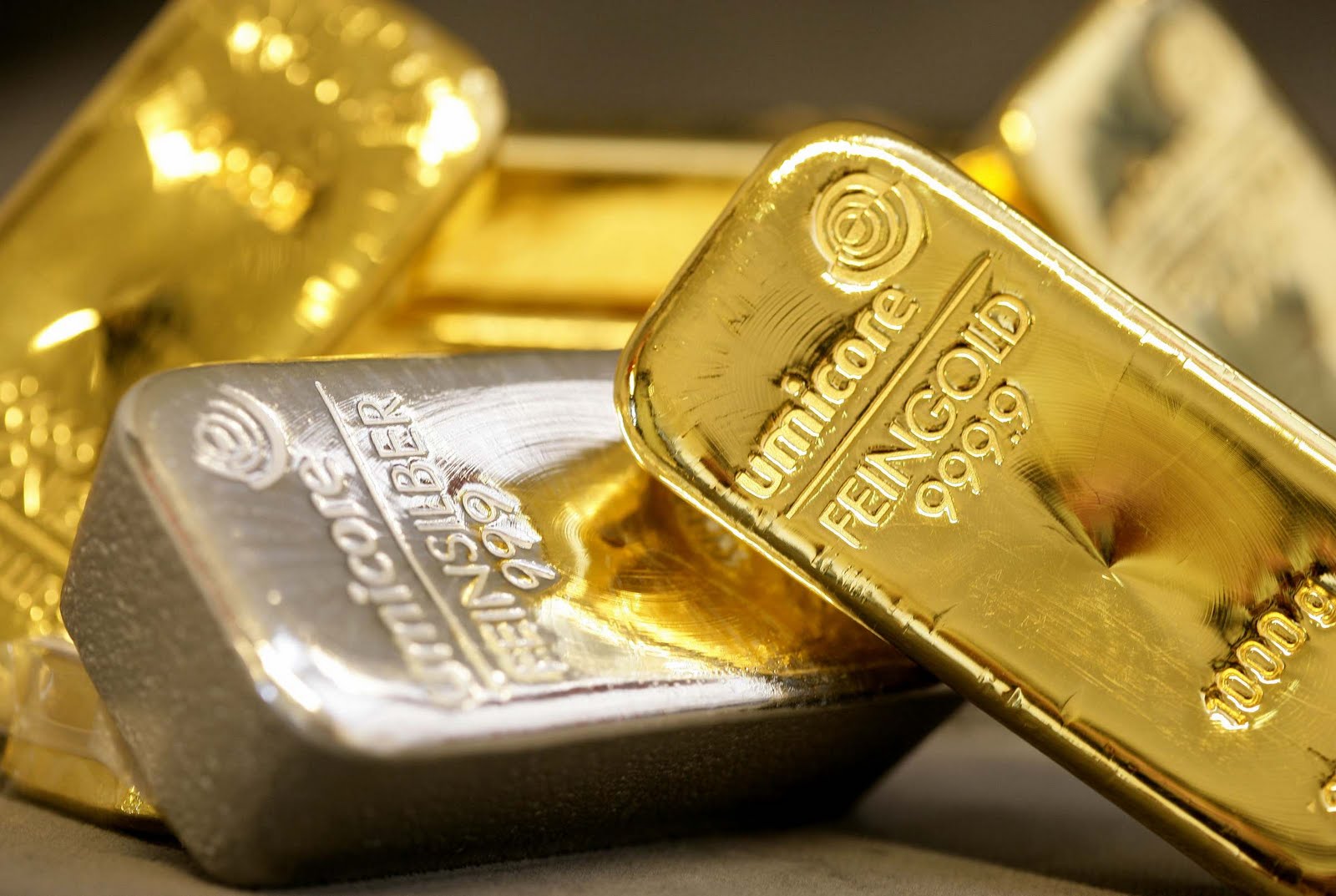
Why the emphasis on Silver (and Gold)?


If you didn't get a chance to check out yesterdays post, The Debt Days of Summer, please take a moment to read it. In many ways today's post rounds out Thurday's post on local real estate, Friday's post on Silver, and yesterday's on Sovereign Debt.

There are three central themes on this blog: Sovereign Debt, Real Estate, Silver (and Gold).

The connection, we like to believe, is simple. 

Sovereign Debt will force interest rates up as the cost of borrowing money becomes critical.  High interest rates will crash the local Real Estate bubble, and the mad dash to print more money to rescue the economy/salvage Sovereign debt will drive the value of Silver and Gold parabolic.

Others in the blogosphere disagree with the last component.

This blog has tried to demonstrate why we believe Silver and Gold will increase. 

It's important to understand, it is our belief that a return to a Gold Standard is not the solution to the world's woes (more on that another time).  However, we do believe there will be a mad dash into Silver and Gold, thus pushing those precious metals exponentially higher.

Further evidence of that trend came out this week from the Bank of International Settlements recent annual report.

According to the Financial Times, the central banks of the world have pulled 635 tonnes of Gold from the Bank for International Settlements in the past year - the largest withdrawal in more than a decade.

This marks a sharp reversal from the previous year when central banks added to deposits of gold at the so-called “bank for central banks” rather than lending it directly to the private sector amid growing concerns over counterparty risk.

The central banks of the world are loading up on Gold.

Why?

As the website Seeking Alpha observes, If you’re a central banker and you actually believe in the value of paper money and your ability to create wealth by printing it... why would you be loading up on Gold?

The central banks of the world are in a competition to devalue their respective currencies against each other. They will work together to suppress a particular currency if a carry-trade gets too out of control (see Japan earlier this year), but in general the ECB wants a cheap Euro, the Fed wants a cheap Dollar and so on and so forth.

These guys know that the financial system is broken. They’ve known it for over a decade (Greenspan even admitted that derivatives could “implode” the market in 1999). But they’re going to kick the paper money can down the road as long as they can… primarily because the entire financial system is banking on their ability to “fix” things.

(And this is why many blogs written by economists or other financial planners/experts eschew Gold and Silver.  Everything they have been taught, everything they know about finance, is wrapped up in their "faith" that the central bankers can "fix" things.)

The 2008 crisis was the first taste of systemic risk. The central banks threw everything including the kitchen sink at the problem in an attempt to hold things up. And it’s worked temporarily in the sense that the financial world still believes central banks can handle the situation.

However, the fact remains that the central banks actually didn’t fix anything. You can only fix a debt problem by paying the debt off or defaulting. Moving it around and issuing more debt to meet current payments does nothing to solve the problem.

In this sense, the world’s central banks literally “bet the farm” on themselves and the view that sovereign balance sheets can stomach this toxic waste. As we’re now discovering in Europe, the laws of the markets (oversaturation of debt, default and the like) apply to countries as well as private banks.

The central banks know this and are now acting accordingly. It is not coincidence that they became net buyers of Gold within two years of the 2008 crisis.

Nor is it coincidence that they are now loading up on Gold at the fastest pace in over a decade.

They know (not think) that systemic risk is still on the table in a big way and that they will be powerless to address the next crisis when it explodes.

You can already see this in their public statements.

Bernanke himself even admitted the Fed has no idea why the economy isn’t recovering.

If you extend the implications of this statement it becomes clear Bernanke and pals are realizing that printing money is not going to patch up the financial system.

Hence the Gold purchases.

In plain terms, the real crisis, the crisis that was put off temporarily during the last two years, is coming.

It will not be a crisis of stocks or bonds. It will be a crisis of the financial system itself. A crisis in which entire countries default. And it will make 2008 look like a picnic.

The central banks are suppressing the price of Gold and Silver right now to support the value of the world's reserve currency - the US Dollar.

A by-product is that it is making the acquisition of Gold and Silver a steal in terms of value when compared to what is coming. And the central banks of the world are snapping it up at these bargain basement prices at the fastest rate of central bank acquisition in over a decade.

Do you think they are doing this because Gold/Silver are in a bubble and vastly overvalued?

That's why, along with the Real Estate bubble and the issue of looming rising interest rates, this blog focuses on Silver (and Gold).

Can it be made any plainer for you to see?

==================
Email: village_whisperer@live.ca
Click 'comments' below to contribute to this post.
Please read disclaimer at bottom of blog.

Friday, July 1, 2011

July 1st Post #2: Alan Greenspan says Quantative Easing a failure!


In a massive critique of the US Federal Reserve and Ben Bernanke, former Chairman Alan Greenspan appeared on CNBC and declared that the Federal Reserve's massive stimulus program had little impact on the U.S. economy besides weakening the dollar and helping U.S. exports.

Greenspan also said that the $2 trillion in quantative easing over the past two years had done little to loosen credit and boost the economy.

  • "There is no evidence that huge inflow of money into the system basically worked. It obviously had some effect on the exchange rate and the exchange rate was a critical issue in export expansion. Aside from that, I am ill-aware of anything that really worked. Not only QE2 but QE1."
Greenspan went on to say he "would be surprised if there was a QE3" because it would "continue erosion of the dollar."

Stunning comments, to be sure, but you can bet the farm there will be more stimulus.  It will simply take another form.
==================
Email: village_whisperer@live.ca
Click 'comments' below to contribute to this post.
Please read disclaimer at bottom of blog.
click here to hear Laurel Archer talk about working as a prostitute while at VGH.

Sunday, April 3, 2011

Real Estate, debt, interest rates, monetary policy, and gold/silver - Part 1

The title of today's post is a snapshot of what this blog talks about virtually every day.

For months I have ruminated about a post that ties them all together, that shows the concerns about Real Estate and how they are tied to debt, which is tied to interest rates, which has been heavily manipulated by monetary policy, which begets the strong interest in gold/silver I talk about.

Yesterday I read another great post by the blogger Gonzalo Lira. And he has articulated a number of pertinent points which I am going to borrow on for this post.

As I have said repeatedly, we still do not fully appreciate - nor do we fully comprehend - the depth and breadth of the financial earthquake that hit us in September, 2008.

The problems that triggered that collapse, and government attempts to manage it, are merely the latest acts in a play that really got underway almost 30 years ago.

As Lira notes, you can clearly see that specific policies were implemented, decisions made and actions taken which set us on the path that brought us to where we are today.

And while some will argue that it was the very invention of the Federal Reserve back in the early 20th century that set us on the current path we are on, a serious look at the policies, decisions and actions carried out in our own lifetimes gives us a clear picture about the path we are on.

It starts in 1975 when the US Congress consistently fails to deliver a balanced budget. This is followed by the US Federal Reserve giving both the U.S. economy and the Federal government a massive subsidy by way of its artificially low interest rates, starting in 1987.

Begining in 1975, the United States has had an uninterrupted string of yearly deficits as the American Federal government has routinely spent more money than it has brought in.

Deficit spending satisfied the ideologies of both sides of the economic divide:

  • For the economic Right, cutting taxes satisfied its notion that more money in the hands of the citizenry and corporations guarantees greater economic growth.
  • For the economic Left, more government spending every year satisfied its notion that more money spent by the government guarantees greater economic growth.
And since 1975, both sides of the political divide have failed to resolve the US fiscal incoherence.

The economic Right wanted lower taxes. The economic Left wanted more fiscal spending. Rather than thrash out their differences and come to a compromise, they resorted to the national credit card: rather than either/or — it’s been both. Both lower taxes and higher Federal government spending — bought and paid for with fiscal debt.

And as each year passed, the Americans have resorted to issuing Treasury bonds to cover the difference. As a result the overall debt has became greater and greater.

It has become so great that total fiscal debt that exceeds 100% of GDP. Yearly deficits for the next five years will exceed 10% of GDP each year.

The US Government has been able to get away with this deficit year after year because of the cheap interest rates it has had to pay for its debt.

Enter the Federal Reserve.

The price of a good is the intersection of its supply and its demand — this is Economics 101. Money is a good like any other — and like any good, it has a price: Its interest rate. Ordinarily, the price of money is fixed by suppliers of credit—that is, banks. They create money via credit—and they sell this money to their customers, the price of this sale being the interest rate that they charge.

Starting in 1987, the Federal Reserve went beyond its mandate of price stability and full employment, and instead went into the business of goosing along the economy.

In other words, it focused on mindless growth — and focused specifically on the blunt, club-like metric of GDP growth — and goosed along the economy in order to raise that mindless metric.

It did this by usurping the role of banks, and providing cheap money by way of low interest rates; low interests rates carried out with the explicit aim of gaming the GDP.

The economy slowing down?

Cut interest rates.

Momentary market panic?

Flood the market with liquidity.

The economy (as measured strictly by GDP) slowing down again?

Cut interest rates some more.

GDP booming?

Very very very slowly and predictably raise rates — then cut ‘em again the instant the GDP looks like it’s starting to slow down.

This was, in a nutshell, what Federal Reserve Chairman Alan Greenspan did during his tenure: he subsidized money for the sake of gaming a single metric, the GDP.

Everyone knew it.

There was even a name for it: The Greenspan Put.

For such an avowed free-marketeer Greenspan was, in reality nothing of the sort. Rather than allow the market to dictate the price of money, he subsidized it like a Socialist Pricing Board. And just like a Soviet apparatchik of old, Greenspan focused on one number — GDP — irrespective of all the other subtle qualifiers that define a healthy economy.

The distortive effects that Greenspan’s money subsidy brought to the US economy are clear to all... serial bubbles. There was:

  • the Dot-com bubble,
  • the Tech bubble,
  • the Bio-Tech bubble,
  • the Collateralized Debt Obligation bubble,
  • the Real Estate bubble,
  • and now the Treasuries bubble
All of these serial bubbles have been blown by the Federal Reserve’s relentless subsidy of the price of money.

Now of course, if you are using the subsidized price of money to goose along an economy, there comes a moment when it doesn’t work anymore.

Enter Ben Bernanke. His Zero Interest Rate Policy (ZIRP) and Quantitative Easing 1, QE lite and QE2 are the perverted policies he has had to pursue in order to keep up the Greenspan Put.

All of The Bernank’s recent policies are aimed at shoring up the “growth” that the U.S. economy has experienced over the last 24 years.

But as Lira points out, that “growth” isn't real. It's steroid-induced bubble muscle. An illusion.

If you measure gross GDP adjusted for inflation, which has been Greenspan’s sole metric, there has been "growth".

However, if measured by median and average wages, per capita incomes adjusted for purchasing power, or any other such metric that measures the well-being of the average, and the below-average,citizen, there has been no growth whatsoever.

People are less well off. The middle class in the United States has shrunk drastically. Sure, the average income might be higher, but that’s the distortive effect you get from having tremendous, inorganic wealth disparities.

It’s not merely that the disparity between the wealthy and the rest of the population is obscene — the disparity skews the results. Remove the top 15% of the population, and the average income in the United States drops below Slovenia’s.

Furthermore the sort of growth the American economy would have experienced since 1987 without this money subsidy would likely have been very different from the growth we have actually experienced.

The growth we have experienced has been speculative. Cheap (ie. subsidized) money that Greenspan made available was set to chase returns via trading, not production.

Had money been expensive, yields that beat savings would have been harder to come by and thereby encouraged savings instead of speculation.

Expensive money would have also kept banks from the insane speculation of the real estate markets: On the one hand, expensive money would have kept low quality buyers from access to credit, and on the other, expensive money would have dissuaded banks from expanding their businesses into riskier territories, in order to reap higher returns.

In other words, risk would have been accurately priced.

In other words, there wouldn’t have been a Global Financial Crisis.

Now, obviously, it’s a fool’s game to try to go back over the 24 years since Greenspan took office and try to deduce what would have been the organic price of money without his and Bernanke’s subsidy.

But clearly, had the Greenspan Put never existed, there would likely have been less growth than has been had.

Would there have been less money for venture capital and the financing of new businesses? Yes, no question. Would those new businesses therefore never have existed? Again, yes.

However: How many ridiculous, fairy-tale businesses would have been financed, as happened during the various bubbles of the last 24 years?

Very few. Capital would have been much more efficiently allocated in a world where there was no subsidy on money. It would have been too expensive for the economy to throw away capital on clearly nonsensical businesses.

Would the solid businesses have gotten financing? The ones that actually did something for the economy, like Google, Ebay, and so on?

Clearly, it would have been tougher for them, and their growth would have been slower — but just as clearly, they would indeed have gotten financing, because they are obviously good businesses.

Anyway, even if many good businesses would have failed to raise financing in a world of more expensive credit, the good outweighs the bad: There would not have been any serial bubbles.

But most importantly... the US Federal government would not have had access to cheap financing. And it is the cheap financing which encouraged the accumulation of back-breaking debt.

Had Greenspan not subsidized money, it would have been far too expensive for the US Federal government to continue increasing its yearly deficits, and adding to the national debt.

A fiscal day of reckoning would have happened a lot sooner and therefore would have been a lot less painful.

It would have been bad (all days of reckoning are bad), but it wouldn’t have been mind-crunchingly destructive as the coming crisis will be.

We are in a world where first Greenspan, and now Bernanke, have keep money at absurdly, unsustainably low prices. The US Federal government was allowed to balloon its fiscal debt to monumental proportions: over 100% of GDP, with future yearly deficits in the +10% of GDP range as far as the eye can see.

The Federal Reserve’s subsidized money has postponed the day of reckoning, insofar as the Federal government debt is concerned. And it is making that day of reckoning much worse than it needed to be.

==================
Email: village_whisperer@live.ca
Click 'comments' below to contribute to this post.
Please read disclaimer at bottom of blog.
Tuesday, February 8, 2011

On the topic of Interest Rates

In last Friday's post, Enthusiasm and Euphoria, I talked about our real estate market conforming to the classic bubble pattern and that it will be rising interest rates that finally prick the bubble.

Dennison's of the Village on the Edge of the Rainforest simply cannot comprehend the looming implosion that will devastate our hamlet on the wet coast.

Many will concede the devastating impact that double digit interest rates will have... but almost to a mortgage holder, they are adamant that interest rates will never climb that high.

For three decades now capital has become progressively cheaper and more easily available. Many people have come to believe that low interest rates now are the norm as they have gone their entire adult lives knowing nothing else.

For those innocent souls the current shifting sands will be nothing short of a paradigm shift. Even those old enough to have watched how the Internet transformed society (a paradigm shift on a scale not seen since the printing press transformed civilization), oblivion reigns supreme.

As noted in a report by the McKinsey Global Institute since 1980, differences in the cost of capital in most countries have converged as financial markets globalized and risk premiums in developing countries fell.

  • Capital became plentiful, and long-term interest rates declined too — primarily as a result of falling investment in assets such as infrastructure and machinery. Global investment fell dramatically, creating a decline in the demand for capital substantially larger than the growth in supply created by Asian current-account surpluses.

    In other words, the “saving glut” so often cited as a cause for low interest rates really resulted from a decline in global investment.

    Today, however, this trend is reversing. Across Africa, Asia, and Latin America, rapid urbanization is increasing the demand for roads, water, power, housing, and factories. Global investment demand will now rise considerably up to 2030, reaching levels not seen since the postwar reconstruction of Europe and Japan.

    The global appetite to save, however, is unlikely to rise in step, for several reasons. China plans to encourage more domestic consumption. Spending will rise as populations age. Even increased expenditure to address or adapt to climate change will play a part. As a result, the world will soon enter a new era of scarce capital and rising real long-term interest rates. Such rates will in turn constrain investment and could ultimately slow global economic growth by as much as 1 percent a year.

Interest rates will be going up.

And while government has gone out of it's way, particularly since the early 1990s, to supress those rates artificially as a means to stimulate the economy, those days are coming to an end.

Our problem is coming to grips with that fact.

It is expected, nay... considered a right of entitlement, that government will be able to continue forever with that rate suppression.

Does the prophet see the future or does he see a line of weakness, a fault or cleavage that will be shattered as easily predicted events unfold?

As posted here we have read how Mark Carney, the Governor of the Bank of Canada, has warned us about what is coming.

Likewise has Alan Greenspan, former Chairman of the US Federal Reserve.

Even most well known Canadian blogs are detailing rising interest rate warnings this week.

The harmonics inherent in this particular act of prophecy are not all that hard to discern.

Ignoring them is nothing less than an act of defiance in the face of overwhelming logic and evidence to the contrary.

==================

Email: village_whisperer@live.ca

Click 'comments' below to contribute to this post.

Please read disclaimer at bottom of blog.

Thursday, December 9, 2010

Ben Bernanke meet Jon Stewart

In case you didn't see it, Jon Stewart offered his observations on US Federal Reserve Chairman Ben Bernanke's Sunday interview with 60 Minutes.

I can't embed the clip, but you can watch by clicking here.

Bernanke said on Sunday that "one myth that is out there is that we are doing is printing money. We're not printing money."

Bernanke made this statement in response to the Fed's actions of creating money out of thin air and buying government bonds.

Stewart juxtaposes Ben's latest 60 Minutes interview against another 60 Minutes interview the Chairman gave just 21 months ago when he was justifying buying corporate assets from the banks.

  • Bernanke: "To lend to a bank we simply use the computer to mark up the size of the account that they have with the Fed, so it's much more akin, although not exactly the same, it's much more akin to printing money than it is to borrowing."

    Interviewer: "You've been printing money then?"

    Bernanke: "Well... effectively and we need to do that"

So, as Stewart notes, the difference was that then the Fed was creating money out of thin air to buy corporate assets and now it's buying government bonds.

How is it that you were printing money then, but now you're not?

Stewart observes, "I guess Bernanke was looking at the average age of the 60 Minutes viewer and betting that anyone who saw him last year is dead now."

While humorous, it does expose something that many critics are sharply focusing on: Bernanke came on national TV and lied to the American people.

In fact, as Michael Pento of Euro Pacific Captial writes, Bernanke came out and told 2 big lies.

  • Lie #1 - The Fed isn’t printing money. Bernanke stated: “The amount of currency in circulation is not changing…the money supply is not changing in any significant way. What we’re doing is lowering interest rates by buying Treasury securities.” Given that it is the Treasury Department’s Bureau of Engraving and Printing, not the Fed, that actually prints paper money, his statement is technically correct while substantively false. However, Bernanke is buying bank assets with Fed credit. With such an arrangement, printing becomes unnecessary.

    According to gentle Ben, credit created to buy something should not be considered money and has no affect on asset prices? But if that’s true, why is he concentrating his buying in the middle of the Treasury yield curve. His stated purpose is to boost bond prices and lower yields in order to stimulate borrowing and aggregate demand. So pushing up bond prices is an act of inflation. Bernanke similarly contradicts himself by saying that he isn’t creating inflation, while at the same time claiming that his easing campaign is designed to boost asset prices to combat the phantom of deflation.

    And by the way, the Fed is causing money supply to increase significantly. The compounded annual growth rate of M2 is over 7% in the last quarter. Apparently in the eyes of the Chairman, a 7% annualized increase in the broad money supply isn’t considered significant.

    Lie #2- Bernanke is “100 % confident” that, when necessary, the Fed can control inflation and reverse its accommodative monetary policy. He stated, “We’ve been very, very clear that we will not allow inflation to rise above 2 percent. We could raise interest rates in 15 minutes if we have to. So, there really is no problem with raising rates, tightening monetary policy, slowing the economy, reducing inflation, at the appropriate time.” He failed to mention that the Fed doesn’t have the will to drain money from the system, without which all tools are useless. The Fed has consistently demonstrated its unwillingness to take the appropriate actions when necessary. In claiming he is 100% confident in his ability to control inflation, Mr. Bernanke ignores the record that during his tenure he has misdiagnosed the economy.

    In June of 2006, Bernanke culminated his inflation fighting efforts by raising the Fed Funds target rate to 5.25%, after CPI inflation reached 4.2%. But that interest rate was enough to help burst the housing bubble and to spark an international credit crisis. Bernanke was completely unaware that the Fed actions had created an economy that had become completely addicted to artificially-produced low interest rates and inflation.

    Shortly after the collapse of the real estate market and the ensuing truncated deflationary-depression, Bernanke took interest rates to near zero percent. But if the Fed was ever really serious about unwinding excessive leverage, the time had clearly arrived. Instead, the U.S. economy has become more addicted to free money than at any other time in our history.

    Commodity prices are soaring once again and the real estate market, banking sector, and the overall economy cling precariously on the arm of government induced bailouts and low interest rates. Even worse, our government has massively increased its level of debt, which now stands at just below $14 trillion. Once the rate of inflation eclipses the Fed’s 2% target rate, which appears likely, how then will the Fed raise rates to contain it? Could the economy then withstand an increase in the cost of home ownership? Most importantly, when will Mr. Bernanke find it politically tenable to dramatically increase debt service payments for the Federal government? In truth, there is never a convenient time to have a severe recession or a depression. Unfortunately, reality can be extremely inconvenient.

    Bernanke was accurate in saying that the economy is not expanding at a sustainable pace. Of course, his prescription was the same as it always is; print more money in the misguided belief that inflation will lead to growth. As such, he indicated that it’s possible that the Fed may actually expand bond purchases beyond the $600 billion announced last month. (Remember that the $600 billion comes after the $1.7 trillion that has already been printed, which failed to produce anything much beyond a weaker dollar). Therefore, the country can look forward to yet more inflation, continued anemic GDP growth, a poorer citizenry, and a vastly lower standard of living.

All of this is followed by news that US Treasuries have suffered their biggest sell off since the collapse of Lehman Bros (see reprint of Financial Times story on this blog).

Thus when QE is supposed to be lowering interest rates, they are rising.

This dynamic is the one which all the R/E shills in the Village on the Edge of the Rainforest remain oblivious/ignorant to.

Bernanke can say he will keep interest rates low for years to come. But the market vigilantes have the ultimate say.

I've posted on this blog numerous times the fears stated by former Federal Reserve Chairman Greenspan that this could happen.

Dramatically higher interest rates are coming. It's only a matter of time.

And when they come, as Bank of Canada Governor Mark Carney has been warning for months now, you don't want to be holding debt of any significance that you can't service at interest rates at the historic norm (8.25% or higher).

People mock the Bears because the collapse has not come yet and anyone who has bought in the last 7 years is way ahead than if they had listened to the Bears.

But unless they cash in on that equity now, hardly any of those buyers will survive what is coming.

Which is why two and a half years ago I became a staunch real estate bear and highly advocate liquidating debt, eschewing debt accumulation and investing to prepare for what is coming.

Regrettably few will appreciate the advice until it is too late.

==================

Email: village_whisperer@live.ca

Click 'comments' below to contribute to this post.

Please read disclaimer at bottom of blog.

Saturday, September 18, 2010

Greenspan: "Time to let the markets power recovery"

Yesterday I made a post about former US Federal Reserve Chairman Alan Greenspan's speech to the Council on Foreign Relations in New York.

Greenspan made some interesting comments about Gold, but that wasn't the only point of interest.

Of particular note for real estate observers in the Village on the Edge of the Rainforest, were comments made about government stimulus.

The still influential Greenspan said fiscal stimulus efforts have fallen far short of expectations, and the government now needs to get out of the way and allow businesses and markets to power the recovery.

“We have to find a way to simmer down the extent of activism that is going on” with government stimulus spending “and allow the economy to heal” itself.

At this point, “we’d probably be better off doing less than more” because “you’d be far better off to allow the normal market forces to operate here," Greenspan said. That’s largely because stimulus spending is not proving as effective as many had hoped. “To the extent the evidence suggests very large deficits concurrently crowd out capital investment, there is a debit to the stimulus program that is somewhere between a third and a half of what the gross stimulus is,” he said.

Greenspan said that the U.S. needs to do something now to deal with budget deficits and it must do something very soon. He explained his anxiety is so high that “I’m coming out in the first time in my memory” in support of higher taxes in addition to reduced spending, including allowing the so-called Bush tax cuts to expire.

“Our choice is not between good and bad; it’s between terrible and worse,” Greenspan said. The nation has “a level of commitment... which I don’t think we can psychically meet,” absent huge changes in how the government finances itself.

These are, once again, stunning statements with potentially massive reprecussions for Vancouver.

The ONLY reason interest rates are so low is because of government intervention.

Given the current state of the worldwide economy and the capital demands of governments, if interest rates were let to float to market level the impact would be profound.

Rates would, at the very least, return to their historical norm over the last twenty years of 8.25%. Government has been manipulating those rates for the last 10 years and the time for that intervention is coming to an end.

When this all plays out, Vancouver real estate is going to implode on a level even the staunchest of bears cannot fathom.

Meanwhile in Victoria

Vancouver has had three consecutive months of dismal real estate sales and September is shaping up to make it four in a row with sales down about 40% from last year.

But that's nothing compared to Victoria where September is on track for a collapse in sales of 75%.

And finally, from the Hyperinflation Debate

Harry Schultz, author of the famous International Harry Schultz Letter [IHSL], has had a long and colourful financial career.

Much like Gonzalo Lira, he is fascinated by the possibility that hyperinflation might be triggered quickly, by a sort of global financial traffic accident. Back on June 10th, 2010 he wrote:

  • "We (collectively) are poised at a heart-stopping moment in economic times. On the one extreme side, the world is on the edge of massive deflation and depression. At the other extreme ... hyperinflation. My view is: Both these extremes are possible. Certainly deflation is, on balance, in play today and gaining ground as money supply is actually declining! Hyperinflation seems impossible when there is not much inflation in most economies. But... hyperinflation is a monetary event, not an economic one, and will happen on an overnight basis, not via a general uptrend in inflation data."

At age 89, Schultz is winding up his businesses and will wind up his IHSL at the end of this year. In the latest letter he summarizing the account of how hyperinflation could happen by Gonzalo Lira and describes Lira's scenario as “a genuine risk” and comments:

  • “Hyperinflation can be triggered in several other ways. Trustfailure (my new word) is the controlling element, which triggers Fearflation (another new word). E.g., a Comex gold delivery default or a major Too-Big-To-Fail bank failure or a self-propelling domino bank-run are all possible triggers. A bond market implosion will result from any of the above, even if it isn’t itself the trigger.”

==================

Email: village_whisperer@live.ca

Click 'comments' below to contribute to this post.

Please read disclaimer at bottom of blog.

Monday, August 2, 2010

A stunning statement by Greenspan

Local blogs continue to ruminate on the pending release this week of the R/E sales statistics for the month of July.

(And for those who are interested in such numbers there is a breakdown at the bottom of this post of the Unit sales per municipality and the percentage drop experienced from July 2009 vs July 2010)

But there was something mentioned on Sunday morning political TV that will ultimately impact Vancouver Real Estate far more profoundly than the start of this current downward trend.

For those of you who believe interest rates will never rise again because the government will not allow it - heed these words of former US Federal Reserve chairman Alan Greenspan;

"There is no doubt that the federal funds rate can be fixed at what the Fed wants it to be but what the government has no control over is long-term interest rates and long-term interest rates are what make the economy move. And if this budget problem eventually merges to the point where it begins to become very toxic, it will be reflected in rising long-term interest rates, rising mortgage rates, lower housing. At the moment there is no sign of that because the financial system is broke and you can not have inflation if the financial system is not working."

In other words, we will be in deflation until the broken financial system is unbroken. And when it does start to repair - look out - because we will then have severe inflation.

And THAT will make this months declining sales numbers look like a selling bonanza.

You can see the Greenspan clip here.

For those are interested, statistics by area from the same source as yesterday:

Real Estate Unit sales comparing July 2009 to 2010

Burnaby East: -64% (57 to 20)
Burnaby North: -47% (215 to 112)
Burnaby South: -52% (257 to 123)
Coquitlam: -45% (304 to 166)
Islands-Van. & Gulf: -75% (12 to 3)
Ladner: -77% (79 - 18)
Maple Ridge: -36% (215 to 136)
New Westminster: -52% (170 to 80)
North Vancouver: -42% (273 to 158)
Pitt Meadows: -46% (41 to 22)
Port Coquitlam: -50% (152 to 75)
Port Moody: -47% (119 to 62)
Richmond: -53% (632 to 292)
Squamish: -3% (31 to 30)
Tsawwassen: -56% (55 to 24)
Vancouver East: -42% (461 to 267)
Vancouver West: -37% (880 to 553)
West Vancouver: -20% (97 to 77)
Whistler: -45% (35 to 19)

==================

Email: village_whisperer@live.ca

Click 'comments' below to contribute to this post.

Please read disclaimer at bottom of blog.

Saturday, June 19, 2010

Ostrich see, Ostrich do

Alan Greenspan is in the news again today repeating what should be the overriding concern of everyone in North America.

The former Federal Reserve Chairman has penned an op ed piece in the Wall Street Journal. In it Greenspan argues that the runaway Federal Deficit threatens to turn the US into the next Greece. He doesn't actually think that the US debt bears any credit risk, due to our ability to print at will, but that there is a substantial risk that borrowing costs will soar.

That last part is particularly important because as you all know, soaring interest rates are what would absolutely decimate the real estate market here on the Village on the Edge of the Rainforest.

1980 style interest rates on a $600,000 mortgage would push monthly payments up to over $11,000 per month. Not too hard to envision massive collapse under those circumstances.

When liquidating all those foreclosed properties, the only way banks could find buyers for these properties (assuming they could find buyers to make similar $3,000 per month mortgage payments) would be if the selling price of these homes came down to $165,0000.

Considering how many homes would be on the market, $100,000 would be a more realistic price point on these homes.

But a real estate collapse on that magnitude seems like science fiction to everyone today. But should it?

Look what is happening today. A simple 0.25% increase in the Bank of Canada rate, tighter mortgage rules and the looming HST have triggered a 10% drop in nationwide real estate sales and - in some cases - a 34% drop in the selling price of some high end homes.

With that in mind, is a drop of 80% in real estate values so outlandish if interest rates were to return to +20% levels?

Of course that's the rub. No one believes interest rates will ever go up significantly again.

And part of that rationalization is that the US Federal Reserve Chairman would never allow that to happen.

But here is the former chairman, Greenspan, noting that market participants are aware of America's towering deficit, yet yields continue their long march lower. Says Greenspan: "This is regrettable, because it is fostering a sense of complacency that can have dire consequences."

Greenspan knows that rates are set by the bond market - they can only be influenced by the Fed.

And the former head of the Federal Reserve is scared that while the bond market is currently driving rates down (creating the complanency he speaks of), this patter can - and will - change on a dime. When the bond market loses confidence in the US financial picture (which it inevitably will), interest rates will soar.

If he's worried, shouldn't we be concerned too?

But we're not.

And not only is Canadian complacency firmly entrenched, we're in outright denial that a problem even exists. And the perfect example of this denial was presented this week by Jay Bryan of the Montreal Gazette newspaper.

  • "With yesterday's report that home resales are cooling and price increases shrinking, we can finally put behind us the horror of Canada's great imaginary housing bubble.

    This mythical creature terrorized credulous analysts and journalists in recent months, only a short while after some of these same unhappy people had been shaken by the equally nonexistent Canadian housing-market collapse.

    What really happened is that Canada suffered a short, steep drop in home prices as the recession hit late in 2008. This was immediately followed by a steep rebound as it became obvious that the recession's rock-bottom interest rates represented a rare chance to buy a home cheaply."

Bryan parrots the line that the politicians and banks have been bleating: that our real-estate rebound was possible because Canada's banking system (unlike America's) remained in good health. Cheap mortgage loans helped repair the modest damage to prices inflicted by the downturn. And that concern about the real estate market is nothing more than fearmongering by those "prone to panic attacks or the temptation to sensationalize."

Bryan argues that we can relax because our future is one in which skyrocketing prices will quickly cool as predictable market forces come into operation.

Joining in on the 'nothing to see here' mantra is Pascal Gauthier of the Toronto Dominion Bank. He says the housing bubble scenario promoted by those doomsayers makes little sense to experienced observers of the housing market.

Gauthier argues that there hasn'st been any sign of a bubble in Canadian real estate. What Canada has experienced was modest overvaluation with very little sign of speculation. The outlook, Gauthier believes, is for a modest fall in clearly overpriced markets, like Vancouver and Toronto, pulling down the national average price by a modest 7%.

Uh-huh. Sounds identical to the tale being told by American real estate defenders in late 2005 (hattip: Vancouver Condo Info).

I agree with Greenspan.

The current environment of low, low interest rates is fostering a sense of complacency that will have dire consequences.

Ignoring that fact is nothing more than burying your head in the sand. Especially considering the dramatic impact it will have on our housing market - and our lives.

==================

Email: village_whisperer@live.ca

Click 'comments' below to contribute to this post.

Please read disclaimer at bottom of blog.

Wednesday, March 31, 2010

When

It's the 64 thousand dollar question.

Colleagues who read the blog agree with the logic of the thought process either can't come to grips with the idea that interest rates will ever rise substantially or... as is more often the case... they want to know... WHEN!

When will interest rates climb... even if it only as high as the 20 year historic norm of 8.25%?

My answer, as always, centres around sovereign debt.

Which is why this news article is of particular note.

The London Telegraph was reporting on news last week that the yield on 10-year Treasuries – the benchmark price of global capital – surged 30 basis points in just two days last week to over 3.9pc, the highest level since the Lehman crisis.

These developments are, of course, the trigger that caused Alan Greenspan to make his "the canary in the coal mine" comment.

As the Telegraph notes after the dramatic sell-off moves in US Treasuries last week sovereign debt fears have racheted up amongst investors and many are braced for further sell-offs as fears grow that the surfeit of US government debt is starting to saturate bond markets.

David Rosenberg at Gluskin Sheff said Treasury yields have ratcheted up 90 basis points since December in a "destabilising fashion" ,for the wrong reasons.

Growth has not been strong enough to revive fears of inflation, commodity prices peaked in January, and US home sales have fallen for the last three months (pointing to a double-dip in the housing market).

Rosenberg said the yield spike recalls the move in the spring of 2007 just as the credit system started to unravel. "The question is how the equity market is going to handle this back-up in rates," he said.

It's still unclear whether China is selling US Treasuries after cutting its holdings for three months in a row, or what its motive may be.

And looming over everything is the worry that markets will not be able to absorb the glut of US debt as the Fed winds down its policy of bond purchases, starting with an exit from mortgage-backed securities.

It currently holds a quarter of the $5 trillion of the MBS market.

The rise in US bond yields has set off mayhem in the 10-year US swaps markets.

As we noted last week, spreads turned negative touching the lowest level in 20 years. The effect was to drive credit costs for high-grade companies such as Berkshire Hathaway below that of the US government... it it a just a technical aberration?

Many are now speculating that the conditions are ripe for the bond vigilantes to rebel against the US government's wasteful ways.

Consider what's happening in the market for US government debt.

America remains in deep trouble. The International Monetary Fund forecasts that the world's largest economy will contract 2.8% this year, which is probably an underestimation.

Unemployment is rising fast and new figures show almost 10%c of US mortgages are now in arrears – up from less than 8%c in March and the highest "delinquency count" since records began almost 40 years ago.

No fewer than one in eight American households are now late paying their mortgage or have already endured foreclosure.

Ordinarily, an economic slowdown of this magnitude would bolster bonds – especially the market for Western government debt, which investors traditionally view as a safe haven.

But, despite the vicious downturn, the price of long-term US government bonds has been falling since the start of 2009, pushing up yields.

The reason is that the vast scale of the American government's indebtedness, has made investors less willing to fund US state spending by buying conventional (un-indexed) Treasury bonds.

Last week these fears came to a head, with the markets demanding a 3.75%c yield on 10 year Treasury notes, a six-month high and up from just 3.19%c the previous week.

As a result, 30-year wholesale mortgage rates surged from below 4%c to 4.74%c – again, in a single week – piling the pressure on cash-strapped households, many of whom are living in fear of their jobs.

Since the summer of 2007, when the credit crunch began in earnest, the US Federal Reserve has slashed interest rates from 5.25% to 0.25%.

These cuts were designed to support the economy by taking the pressure off highly-indebted banks, firms and households. But, whatever base rates have been set by the US Federal Reserve, the market is now driving the borrowing costs that companies, individuals and governments actually pay much higher.

For a long time many in the blogosphere have warned that the bond-market vigilantes would ultimately rebel against the Western world's profligate borrowing and spending.

That rebellion is now stirring in the most important economy on earth.

What happened in the US last week – almost a 60 basis-point rise in the 10-year Treasury yield, including a spike of 20 points in less than an hour – marks a significant turning of the screw.

And if interest rates are driven higher still, as the market asserts its authority, Greenspan's 'canary in the mine' comment will loom large.

Why did US Treasury yields rise so sharply last week? One catalyst was extremely soft investor demand for a $26bn (£16bn) issuance of US government debt.

Another was the latest bout of what we must call "quantitative easing" – when central banks create money to buy sovereign debt back off the markets in a bid to recapitalise the banks. Last week, alarmingly, dealers tried to sell the Fed far more bonds than it was willing to buy.

This spooked many bond traders, causing them to re-examine just how much QE the Fed can ultimately afford.

The recent decision by ratings agency Standard and Poor's to warn the UK over a potential sovereign downgrade has also had implications state-side. Many think S&P could end up downgrading the US.

Slowly but surely, global investors are becoming ever more concerned that QE, and massive sovereign debt issuance, than they are about fears of inflation.

And as they do, this will cause enormous Western price pressures.

Core inflation remains stubbornly high and rising oil prices and the destructive impact of the credit crunch on the supply chain aren't helping either.

Despite official warnings of deflation, the swaps market shows investors are increasingly unconvinced. Suspicion abounds that government in the US and UK, in particular, are now stoking inflation in order to monetise their massive debts.

In the 70s, US Treasuries went through a similar period in which confidence in the United States was severely shaken.

Rates on ten year bonds went from under 4% to 14 7/8%.

Overnight money went above 21%.

Confidence is what makes currency value and that is sundering fast.

When?

Watch the evolving story of western sovereign debt. History is playing out before our very eyes.

==================

Email: village_whisperer@live.ca
Click 'comments' below to contribute to this post.

Please read disclaimer at bottom of blog.

Saturday, March 20, 2010

Alan Greenspan: The Fed Failed


Let's take a momentary break from our series for this must-read treatsie from Alan Greenspan.

I will post some concluding thoughts on this past week's series on Monday.

Today, however, check out this newly released paper from the former US Federal Reserve Chairman. In it, Greenspan discusses the causes of the financial crisis and the Fed’s failures leading up to it.

Greenspan is famous for his libertarian leanings and hands-off approach to Wall Street, but he now appears (finally) to be having some second thoughts.

Once celebrated as the “maestro” of economic policy, Greenspan has seen his reputation dim after failing to avert the credit bubble that nearly brought down the financial system. Now, in a 48-page paper that is by both analytical and apologetic, he is calling for a degree of greater banking regulation in several areas.

The report, which he presented Friday to the Brookings Institution, acknowledges his shortcomings in regulation and admits that, "regrettably, we did little to address the problem."

The former Fed chairman also acknowledged that the central bank failed to grasp the magnitude of the housing bubble but argued, as he has before, that its policy of low interest rates was not to blame. He stood by his conviction that little could be done to identify a bubble before it burst, much less to pop it.

“We had been lulled into a sense of complacency by the only modestly negative economic aftermaths of the stock market crash of 1987 and the dot-com boom,” Mr. Greenspan writes. “Given history, we believed that any declines in home prices would be gradual. Destabilizing debt problems were not perceived to arise under those conditions.”

Click here to see full document


To read the next part of our series, click here.

==================

Email: village_whisperer@live.ca
Click 'comments' below to contribute to this post.


Please read disclaimer at bottom of blog.

Thursday, March 11, 2010

Through the Looking Glass and What Bernanke Found There

Today I am reminded of the book 'Through the Looking-Glass, and What Alice Found There'. Written by Lewis Carroll in 1871, it is the sequel to Alice's Adventures in Wonderland (1865).

Although it makes no reference to the events in the earlier book, the themes and settings of 'Through the Looking-Glass' make it a kind of mirror image of Wonderland including opposites, time running backwards, and so on.

Kinda like the mirror image of rational finances we are currently seeing in the western world.

Reinforcing that imagery is the Monthly Treasury Statement released yesterday. As Tyler Durden of Zero Hedge asks, what's wrong with this picture?

The United States has completed another month in the red. In February, the budget deficit was $220.9 billion, after receipts of just $107.5 billion with vastly surpassed by outlays of $328.4 billion.

That, btw, is a record.

Yet the interest on the public debt was a mere $16.9 billion (page 13 of the MTS report). The reason, as Durden writes, is because in February the interest on public marketable debt (which as of Monday stood at $8.061 trillion) hit an all time low of 2.548%.

In a normal world, the more money you borrow, the greater the associated risk, and the greater the interest payments on this debt. How is it possible that unprecedented debt accumulation can result in ever declining interest rates?

It's a rhetorical question, of course.

We know the answer. The US Federal Reserve, through complete domination of the entire capital market courtesy of ZIRP and Quantitative Easing, have now turned market logic upside down by 180 degrees.

Can we assume that the Fed can forever keep rates on debt at record low levels?

The only way that will happen is if the United States engages in Quantitative Easing to Infinity. If that becomes the only course of action, at some point all that money will have to enter the money supply and - voila! - hyperinflation.

Now we already know that current US Fed chairman Bernanke insists he won't do that. He delivered a blunt warning on U.S. debt and outlined how the stage is set for a Greek-style debt tragedy in the United States if dramatic action isn't taken on the national debt because the Federal Reserve won't monetize the debt with QE to infinity.

Does it look like the politicians heeded Bernanke's warning? Do you see how the United States is racing towards a cliff's edge?

If Bernanke remains true to his word, then you can understand former US Fed chairman Alan Greenspan's concerns when he said that he keeps daily watch on the interest rate on 10-year Treasury notes and 30-year Treasury bonds and calls them the "critical Achilles' heel" of the US economy?

Those spreads are some point are going to spin wildly out of the control at a moment's notice as investors come to full grips with what is looming on the horizon.

The only reason we haven't encountered that scenario is because the QE hasn't ended yet and because no one believes Bernanke won't continue with the policy.

And who can blame them?

Ask youself, what happens if the Fed ends the practice of keeping rates on debt at record low levels?

Currently income from taxes in the United States are plunging. Despite platitudes to the contrary, the economy is not rebounding and incomes are not rising - they're falling. Thus income from taxes are plunging dramatically.

Meanwhile the expenditure side of the ledger has exploded, and not as a function of debt funding: the bulk of outlays have to do with entitlement programs (social security, medicare, etc).

As expenses rise and income falls, it can only mean one thing: more debt.

Recently the debt ceiling was raised to $14.3 trillion which is expected to be hit in less than a year. Observant readers will recall that the previous ceiling of $12.4 trillion was supposed to last the US until the end of March.

Not only was this number passed over a week ago, it is now (less than halfway into the month of March) at $12.5 trillion. Left as it was, the US have broken the debt ceiling far in advance of expectations.

[And remember. This is a debt CEILING... the level goverment won't allow debt to pass!!!]

Obviously this leads us to believe that the $14.3 trillion ceiling will likely have to be raised once again.

Bernanke said the stage is set for a Greek-style debt tragedy in the United States, and he isn't kidding. Consider...
  • Just as recently as September 2007 the interest rate on marketable debt was nearly 5%. It plunged to 2.5% in a year. Even the mere mention of actual tightening will spring rates right back to 5%. What does that mean for actual outlays?
  • If total debt hits $14.3 trillion it will mean the marketable debt will be about $10 trillion, and the incremental 250 bps of interest will mean about $250 billion of additional interest outlays a year, or half a trillion annually.
  • That comes to about $42 billion a month in interest payments alone.

In January 2010, $42 billion dollars represents double the amount of all money collected by the United States in income taxes.

If interest rates are allowed to rise, it will decimate the United States of America.

The bottom line is that either Bernanke will be true to his word and the bond vigilantes will force America into the same brutal debt management as Greece or Bernanke is going to pull the United States permanently to the other side of the Looking Glass and give us quantitative easing to infinity.

Do the math and the conclusions are inescapable.

We are going to have either sky-high interest rates from sovereign debt problems or Bernanke will trigger significant inflation with QE to infinity.

What more do you need to know when discussing the future of real estate in Vancouver and Canada?

==================

Email: village_whisperer@live.ca
Click 'comments' below to contribute to this post.

Please read disclaimer at bottom of blog.

Thursday, March 4, 2010

Black Swan

Notwithstanding recommendations from the likes of the CD Howe Institute, the reality is that the Bank of Canada is going to have to dramatically increase the bank rate here very shortly.

StatsCan reports that growth was a blistering 5% in the last few months of 2009, way above expectations. Virtually every mainstream economist is now saying that the Bank of Canada has every justification it needs to start in on a string of interest rate increases, starting in about 3 months.

The surging economy "increases the odds the Bank of Canada will begin to hike interest rates in July and stay on that path in the following decisions,” says the Bank of Montreal.

Rates are going up.

The only question is: 'how fast' and 'by how much'.

Which brings us back to the issue of sovereign debt and Greece.

The image posted above are the Debt vs. GDP ratios of the world's larger economies according to the Wall Street Journal (click on image to enlarge).

Note that Greece's debt versus GDP sits at a shade over 125% versus the USA's near 100% ratio. Japan comes in as the debt champion at a 200% debt load versus GDP.

So... ummm... exactly how is the western world all that different from the Greeks?

The answer is that the Greeks don't have a currency that they can devalue in order to help inflate themselves out of their debt.

Japan would be toast right now if they were in the same situation with a currency like the Euro that they couldn't manipulate.

Because the Greeks don't have this ability, it has increased the perception of the risk that Greece could possibly default. That's what's making it very costly for Greece to sell bonds in order to fund itself.

What's amusing is watching the central banks in the UK and Japan scramble to avoid becoming the next Greece. The British Pound has taken a brutal beating as some speculators believe England may be the next country to suffocate in their own debt.

But as we noted two days ago, there is no smugness in watching what is playing out overseas because even Ben Bernanke and Alan Greenspan are concerned.

And with good reason. USA government debt is 90% vs. GDP as opposed to the 130% debt vs. GDP ratio in Greece. Anyone who thinks the US is at a lower risk than Greece is only deluding themselves. It's much like telling yourself that you are at a lower risk of having a heart attack when you are 290lbs versus being 330lbs!

The biggest worry is that investors begin to panic over the sovereign debt worries of several countries all around the world.

This could potentially trigger a wild fire as the world realizes that all of the modern economies minus China have the same problem.

The subprime crisis is a good example of watching how one tiny domino can make them all come tumbling down. If the debt spreads begin to blow out on the sovereign debt of several countries like the spreads blew out in the United States with mortgage backed securities back in 2008, then we are going to see one hell of a fiscal tidal wave.

As we have already noted... Bernanke and Greenspan both see the threat and have been moved to comment publicly on it.

Greenspan keeps daily watch on the interest rate on 10-year Treasury notes and 30-year Treasury bonds and calls them the "critical Achilles' heel" of the economy.

And that's because those spreads could spin wildly out of the control of his buddy, Ben Bernanke, at a moment's notice.

It represents the quintessential 'black swan' occurrence; those high-impact, hard-to-predict events that are beyond the realm of normal expectations.

But I ask you... would such a scenario really be all that unexpected right now? And just how stupid is it if you don't make moves to protect yourself?

==================

Email: village_whisperer@live.ca
Click 'comments' below to contribute to this post.

Please read disclaimer at bottom of blog.

Tuesday, March 2, 2010

An unequivocal warning from Bernanke & Greenspan

Well, the Olympics are over and I'm exhausted.

I'll have comments on the experience and I have a ton of pictures for you, but I'll save that for later in the week.

For now, back to the main focus of the blog.

As I have repeated over and over again, the story of Vancouver Real Estate (and real estate in Canada) is tied to the story of interest rates.

If interest rates go up significantly, the real estate bubble will burst in spectacular fashion. If interest rates fail to rise, real estate will continue to climb in value at ridiculous rates.

And, as I have posted over and over again, I believe world events - particularly as they relate to sovereign debt - make significant, prolonged rate hikes unavoidable.

Naturally, I think interest rates will shoot up. That's why my advice to anyone who cares to hear it is to eliminate/reduce debt now and extract capital gains on real estate ASAP.

Reinforcing this position are comments made at the highest levels.

Last week, as reported in the Washington Times newspaper, US Federal Reserve Chairman Ben Bernanke delivered a blunt warning on U.S. debt and outlined how the stage is set for a Greek-style debt tragedy in the United States.

Now this is nothing new. Your dilligent scribe has been pounding that drum relentlessly.

But when the current and former Chairman's of the US Federal Reserve start saying it publically, you should stand up and take note.

From the article:

  • With uncharacteristic bluntness, Federal Reserve Chairman Ben S. Bernanke warned Congress on Wednesday that the United States could soon face a debt crisis like the one in Greece, and declared that the central bank will not help legislators by printing money to pay for the ballooning federal debt.

    Recent events in Europe, where Greece and other nations with large, unsustainable deficits like the United States are having increasing trouble selling their debt to investors, show that the U.S. is vulnerable to a sudden reversal of fortunes that would force taxpayers to pay higher interest rates on the debt, Mr. Bernanke said.

    "It's not something that is 10 years away. It affects the markets currently," he told the House Financial Services Committee. "It is possible that bond markets will become worried about the sustainability [of yearly deficits over $1 trillion], and we may find ourselves facing higher interest rates even today."

Now the key element of this article is that Bernanke, for the first time, addressed concerns that the failure of the US to address debt will eventually force the Federal Reserve to accommodate deficits by printing money and buying Treasury bonds — effectively financing the deficit on behalf of Congress and spurring inflation in the process.

Interestingly, Bernanke declared flatly that the Federal Reserve won't do that. "We're not going to monetize the debt," Bernanke said.

If the Fed, in fact, stands firm on this then Congress will have to slash and cut like never before. But the problem is that no one believes Congress has the resolve to do that.

Even Alan Greenspan (the former Chairman of the US Federal Reserve) is cited in the above article stating that "Congress and the White House have been unable for years to control spending by making tough decisions to raise taxes or cut spending."

This lead Greenspan to note that the current situation is so dire that he believes we could see a sudden, sharp increase in interest rates at any time. Greenspan keeps daily watch on the interest rate on 10-year Treasury notes and 30-year Treasury bonds and calls them the "critical Achilles' heel" of the economy.

Thus the stage is set for a Greek-style debt tragedy in America.

And you can bet the farm that, when it comes, a 'sudden, sharp' increase will occur in hours, not days or weeks. It means there won't be any time to move out of your variable interest rate mortgage and into a fixed term mortgage at a rate anywhere near what it is now.

Now I ask you to consider... if Ben Bernanke is adament that the debt situation and high interest rates are "not something that is 10 years away" and Alan Greenspan fears a "sudden, sharp increase in interest rates at any time", then I would humbly suggest that higher interest rates are not the vague, distant possiblity that so many Vancouverites keep telling themselves it is.

To ignore the threat of looming high interest rates and dismiss them as simple fear-mongering is foolish rationalization that can completely destroy you financially.

The warnings are being issued almost on a daily basis now.

When the time comes, you can rest assured the central bankers and your local banker will adopt the same mindset that lies behind this telling quote from Ben Bernanke uttered on October 15th 2007...

"It is not the responsibility of the Federal Reserve - nor would it be appropriate - to protect lenders and investors from the consequences of their financial decisions."

There will be no bailout for the common borrower.

==================

Email: village_whisperer@live.ca
Click 'comments' below to contribute to this post.

Please read disclaimer at bottom of blog.

Wednesday, September 9, 2009

Alan Greenspan raises the inflation alarm

If the impact of looming huge government debt servicing isn't enough to raise your concerns about future huge interest rate hikes, then maybe this will.

Alan Greenspan has finally come out to warn against the other pending threat: government stimulus.

Finance ministers and central bankers from the Group of 20 economies met on Saturday and pledged to maintain policies designed to support economic growth (aka: more fiscal stimulus).

But Greenspan echos what we have been saying here for months... taking away the economic punch bowl in a democracy, particularly during times of high unemployment, can be very, very difficult to do. And with a recovery appearing to start, a continuation of the current policy will only fuel a surge in inflation.

Enter Alan Greenspan;

"The US economy may witness double-digit inflation in a few years unless the central bank tightens up its monetary policy," Alan Greenspan warned.

"Unless we roll in this whole degree of expansion, we will be in trouble,” the former chairman of the Federal Reserve told a conference in Mumbai via videoconferencing. “I am not talking 3-5 per cent inflation, I am talking double-digit inflation in the US.”

And double digit inflation will trigger double digit interest rates.

Greenspan predicted that inflation in the US could begin to pick up sometime in 2012 unless measures were taken to roll back the huge monetary base now.

But on the same day that Greenspan uttered this warning come reports that the job outlook hitting it's worst level ever in the United States.

Further disuading political action to end the stimulus are reports that consumer credit fell by a record $21.6 billion, or 10 percent at an annual rate, to $2.5 trillion. According to a Federal Reserve report released yesterday in Washington credit fell for a sixth month, the longest series of declines since 1991.

Politicians won't want to halt the flooding of cash into the system. It's a toxic mix: huge debt to be financed and looming inflation; a concoction that can only trigger sky-high interest rates for years to come.

And sky-high interest rates - as we have clearly spelled out this week - will devestate the Lower Mainland housing market.

Which, by the way, brings us to another Greenspan quote that is almost tailor-made for Lower Mainland real estate bugs. In a one-year anniversary special on the financial crisis this week, Greenspan told the BBC, "Financial crises are all different, but they have one fundamental source. That is the unquenchable capability of human beings when confronted with long periods of prosperity to presume that it will continue."

Gee Alan, are you questioning the mantra that Real Estate in BC will keep going up, up, up?

Nahhhh, couldn't be. The future looks bright for BC real estate, right?

Maybe we shouldn't be pointing out what appears so obvious.

As one reader said to us in a recent email, perhaps we're being too negative here with our 'whispers'.

Perhaps we should stick our fingers in our ears and chant "la, la, la, la, la" to all the signs we can clearly see around us.

"La, la, la, la, la."

There... doesn't that feel better?

I mean, why prepare for what's coming. The BC and Canadian government's will bail us out if real estate collapses, won't they?

"La, la, la, la, la..."

====================

Email: village_whisperer@live.ca
Click 'comments' below to contribute to this post.


Please read disclaimer at bottom of blog.